User Personas
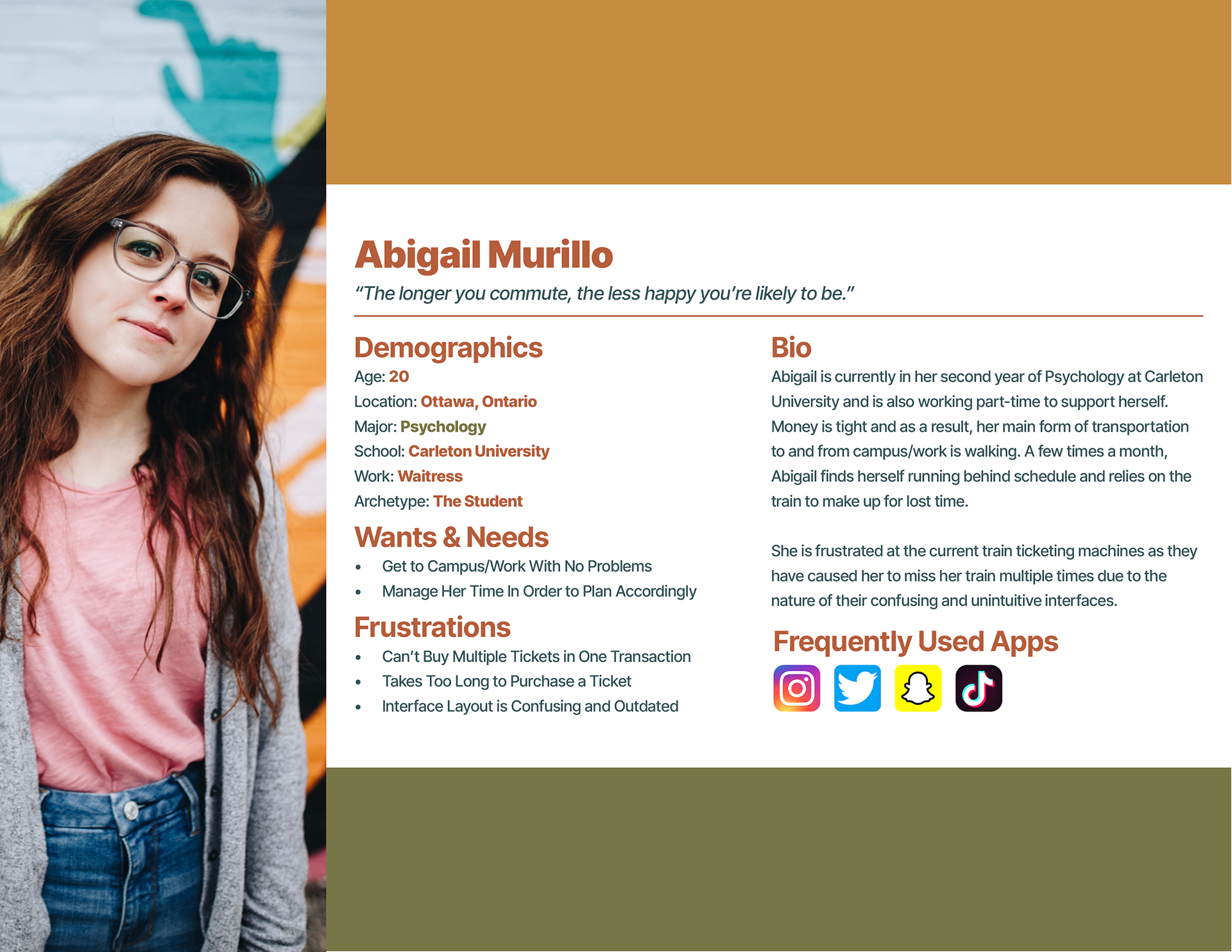
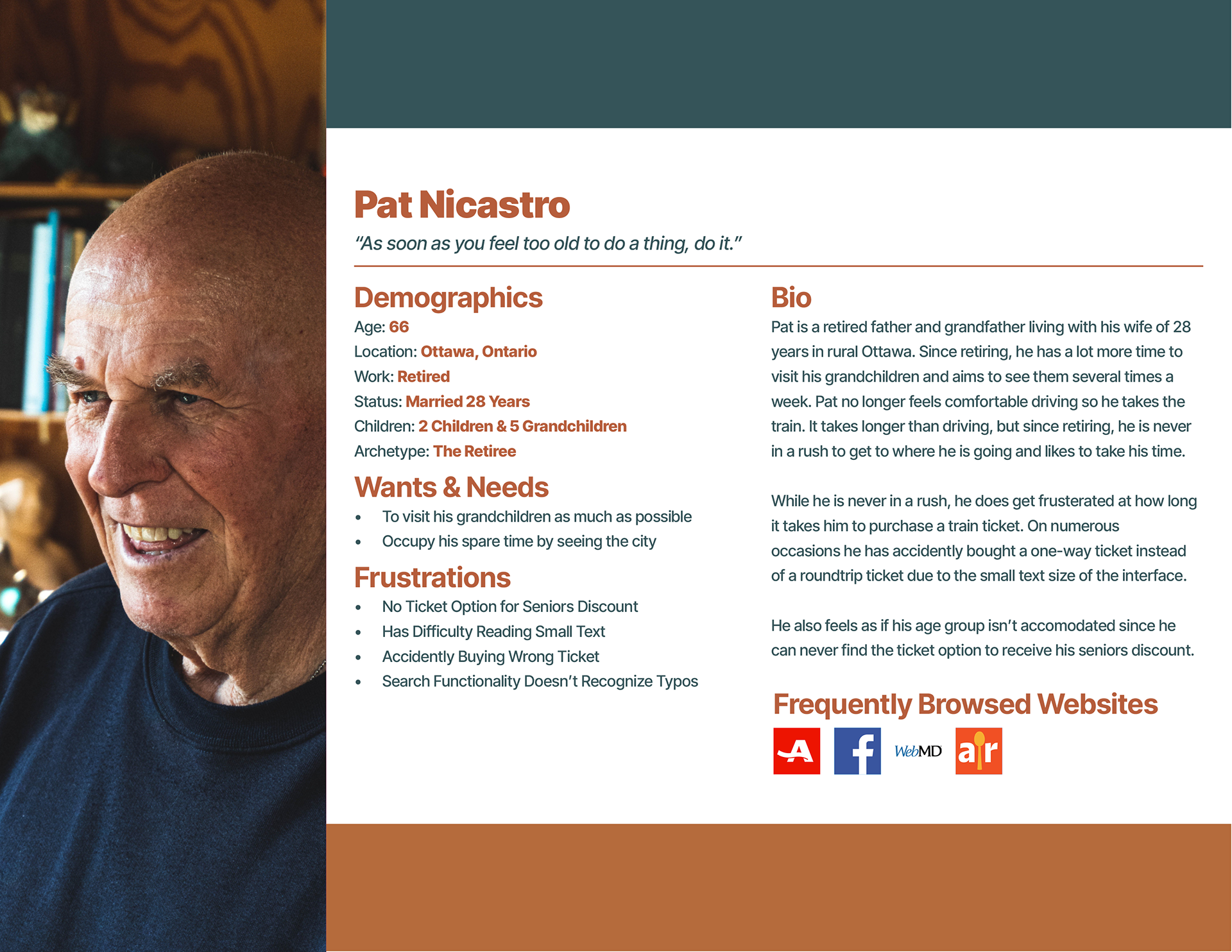
This assignment involved identifying an appropriate user group for a public train ticketing machine and developing a detailed persona to represent that group. The goal was to capture realistic user needs, behaviors, and expectations when interacting with a complex, publicly accessible machine interface. The resulting persona was intended to support a user-centered design process and serve as a foundation for subsequent UX research, analysis, and design work throughout the course.
User Research Questionnaire
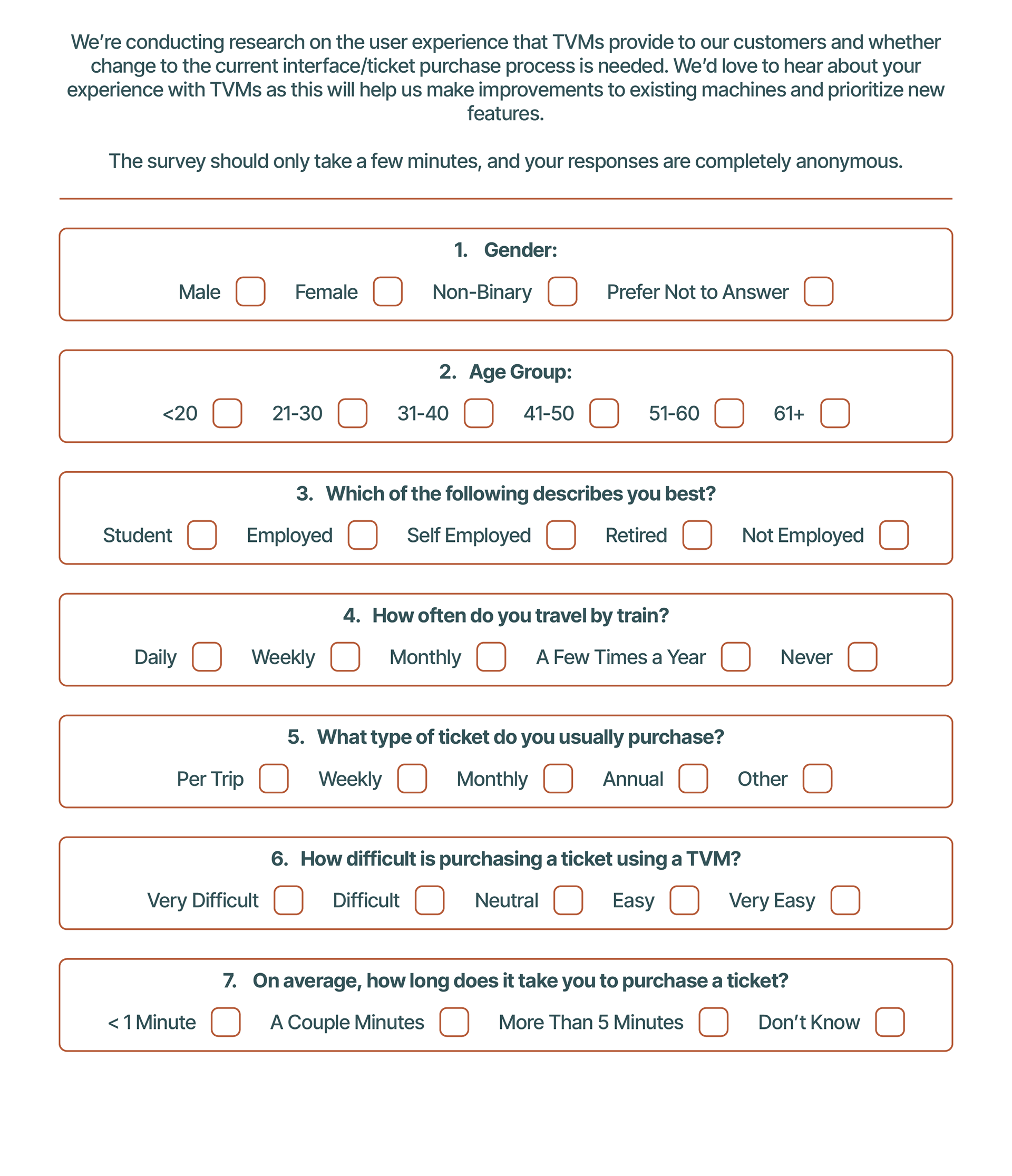
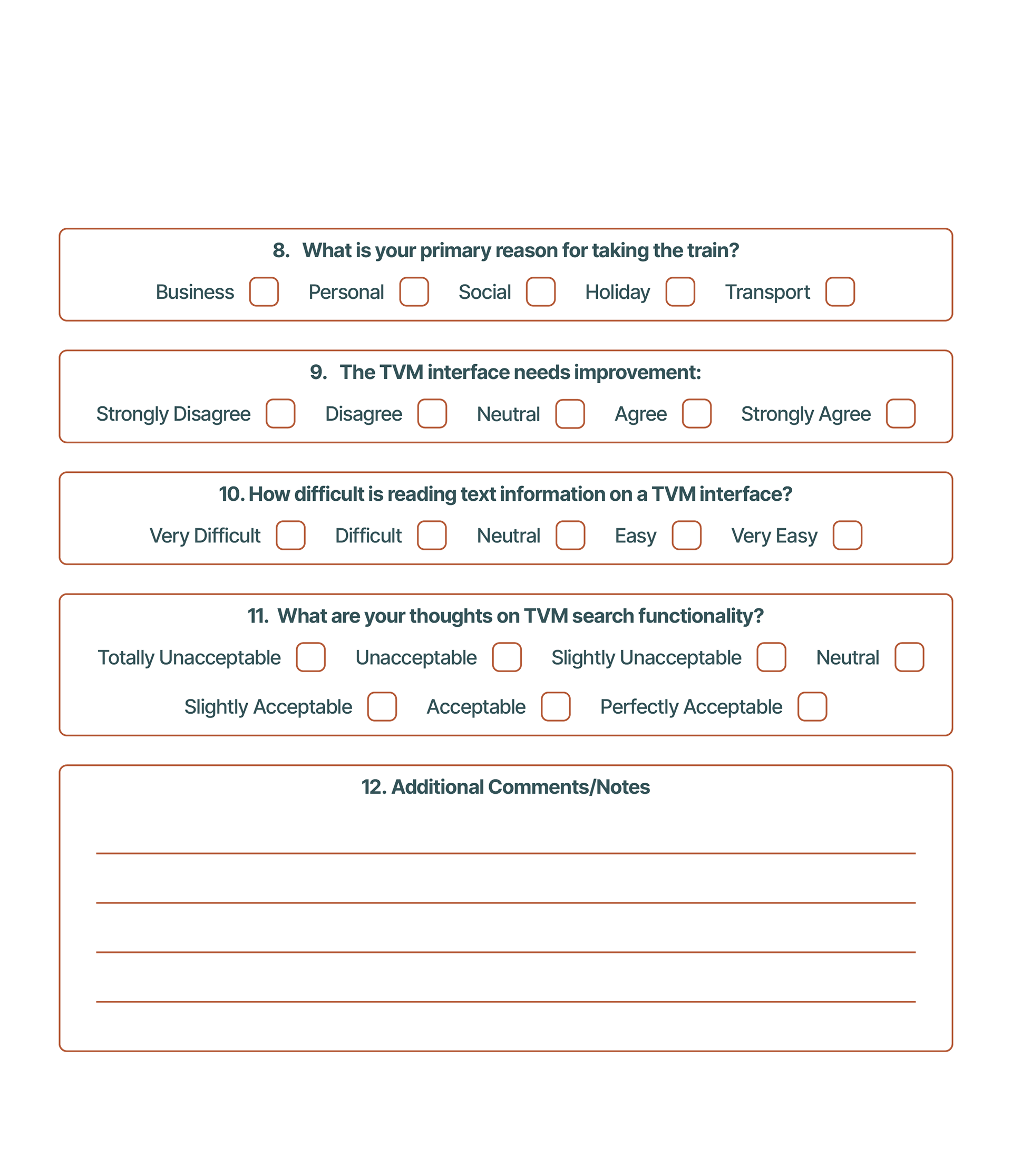
This assignment focused on designing a user questionnaire to gather requirements for a public train ticketing machine interface. The survey was intended to capture user goals, behaviors, challenges, and levels of familiarity with ticketing machines, providing insight to inform persona development and guide user-centered design decisions for the interface.
Task Analysis
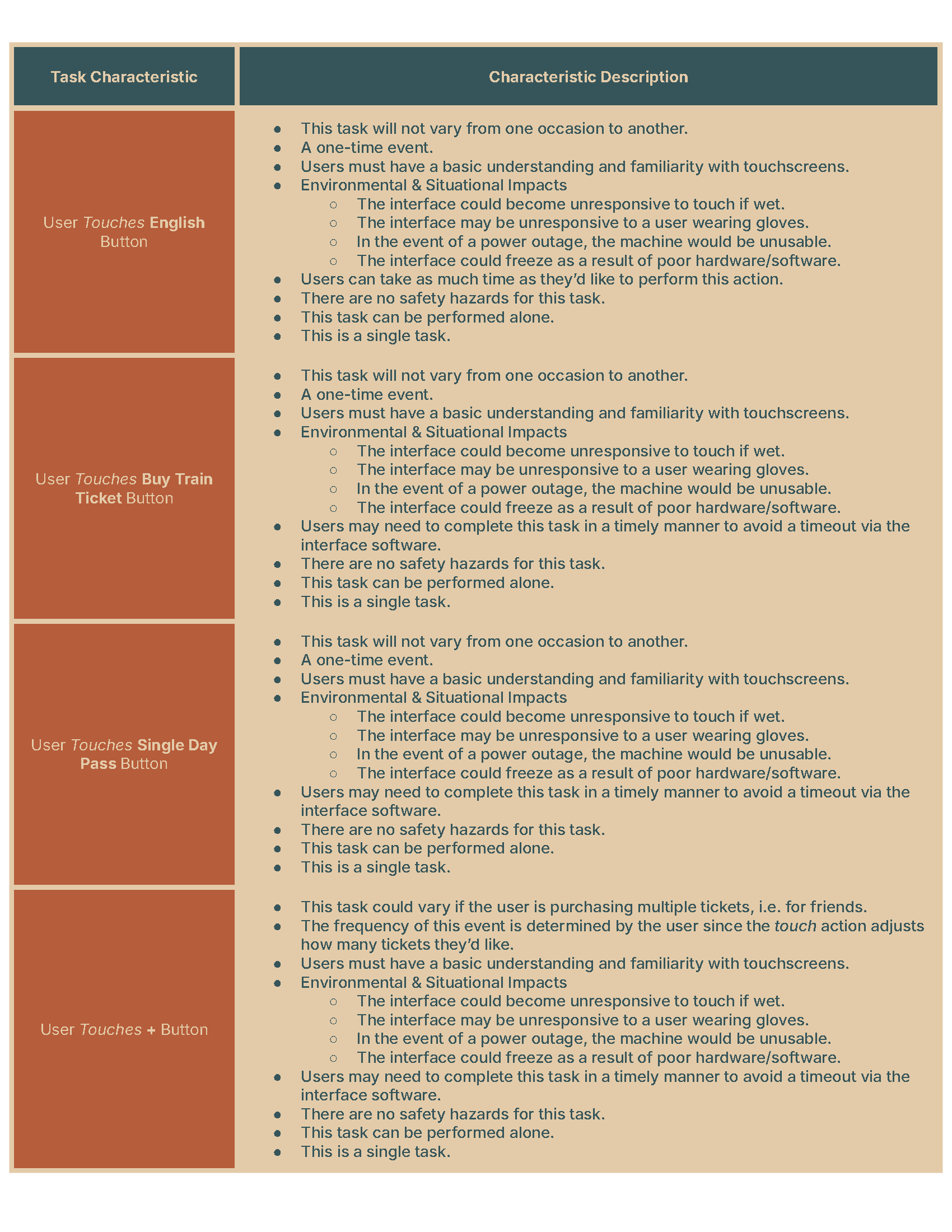
This task analysis breaks down the steps a user takes when purchasing a train ticket through a public ticketing machine. The goal was to identify user actions, decision points, and potential friction areas in the process, providing a clear foundation for improving workflow efficiency and usability in later design stages.
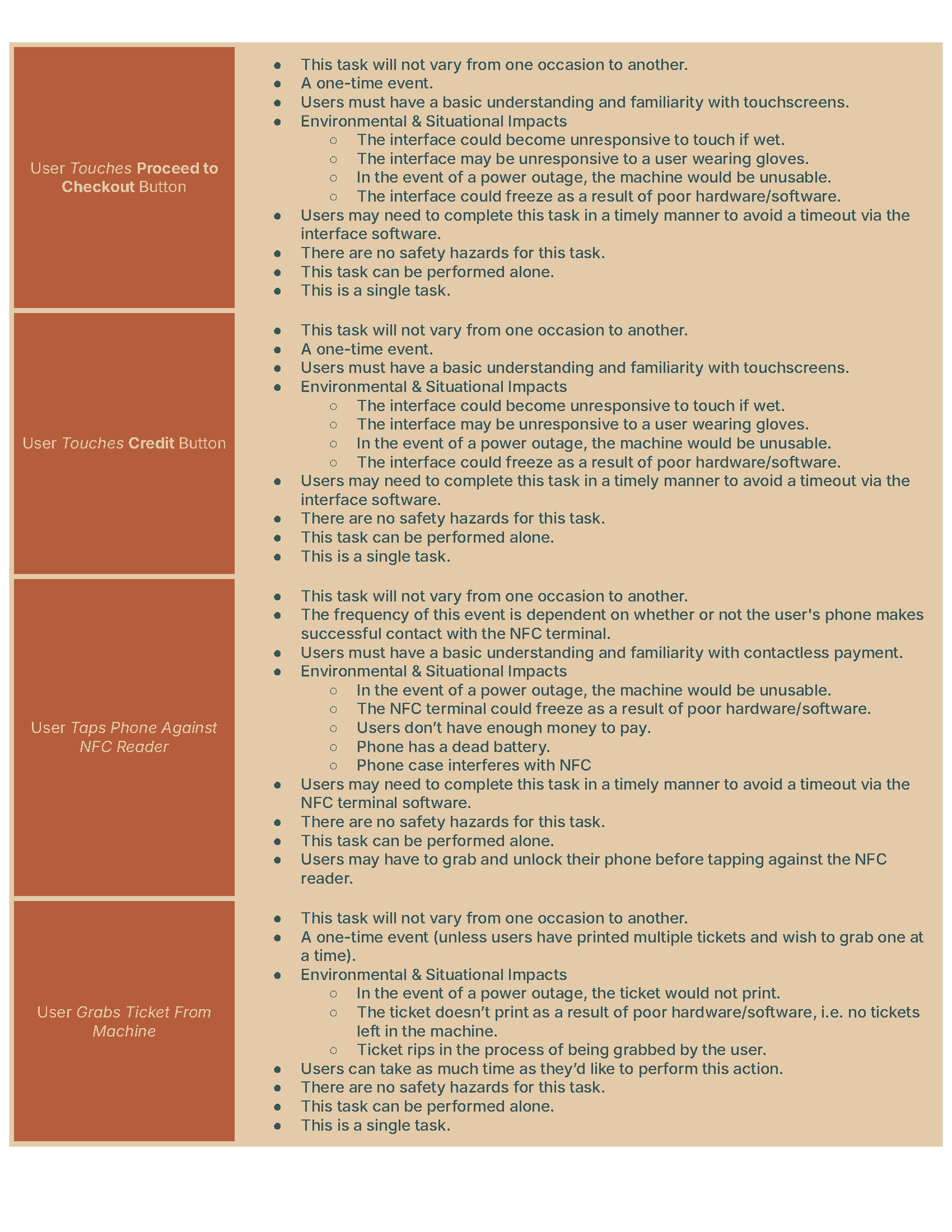
Hierarchical Task Analysis: Buying a train ticket
This hierarchical task analysis organizes the process of buying a train ticket into primary goals, sub-tasks, and supporting actions. By structuring the ticket-purchase flow into clear levels, this analysis helps reveal task dependencies, decision points, and opportunities to streamline the interaction, informing more intuitive and efficient interface design.
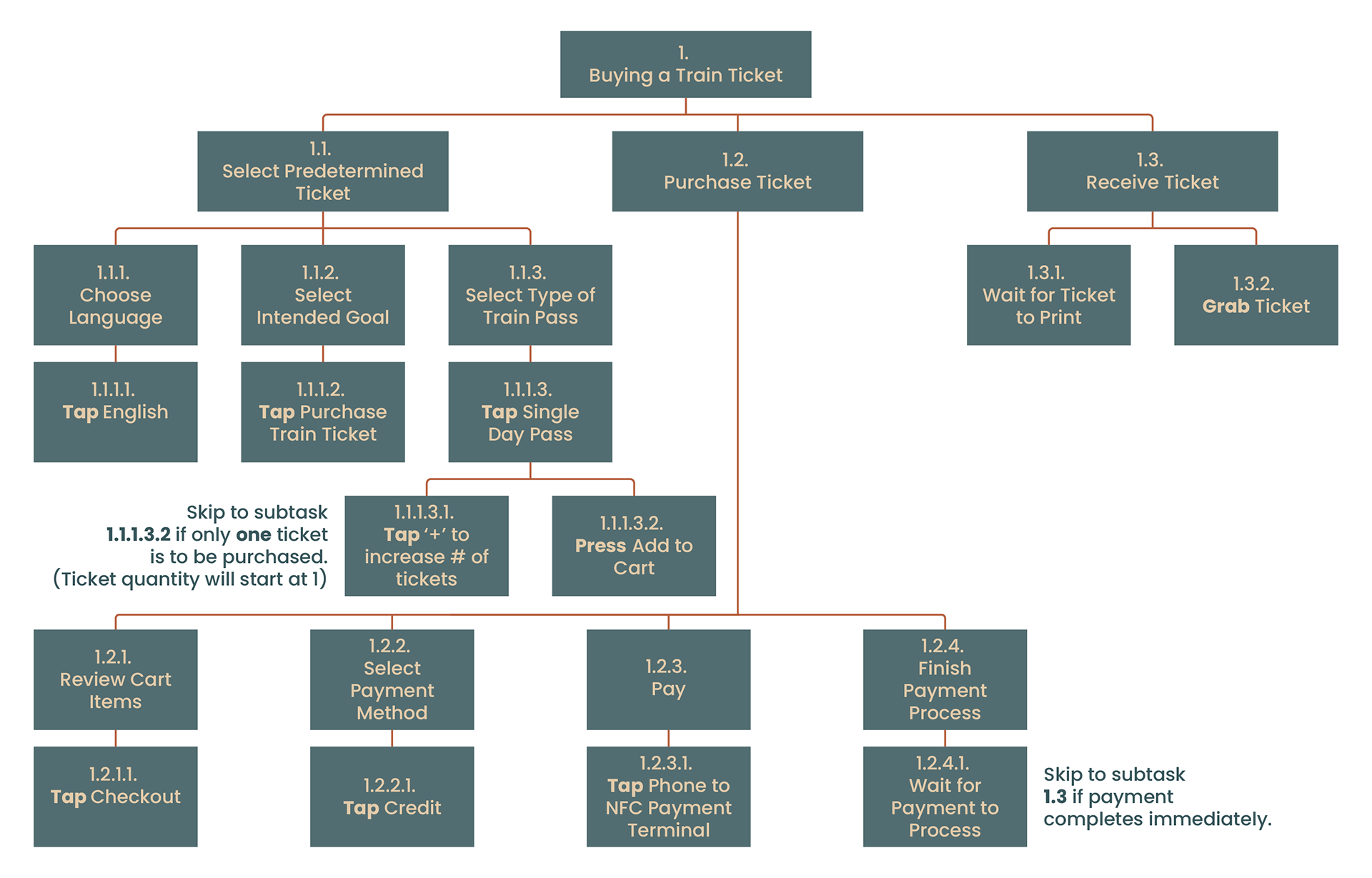
User Scenario: Purchasing a Train Ticket
This scenario describes a realistic situation in which a user purchases a train ticket using a public ticketing machine. Written as a short narrative, it focuses on the user’s goals, actions, and context of use to highlight real interaction needs and uncover potential usability challenges, helping inform later design decisions without relying on technical details.
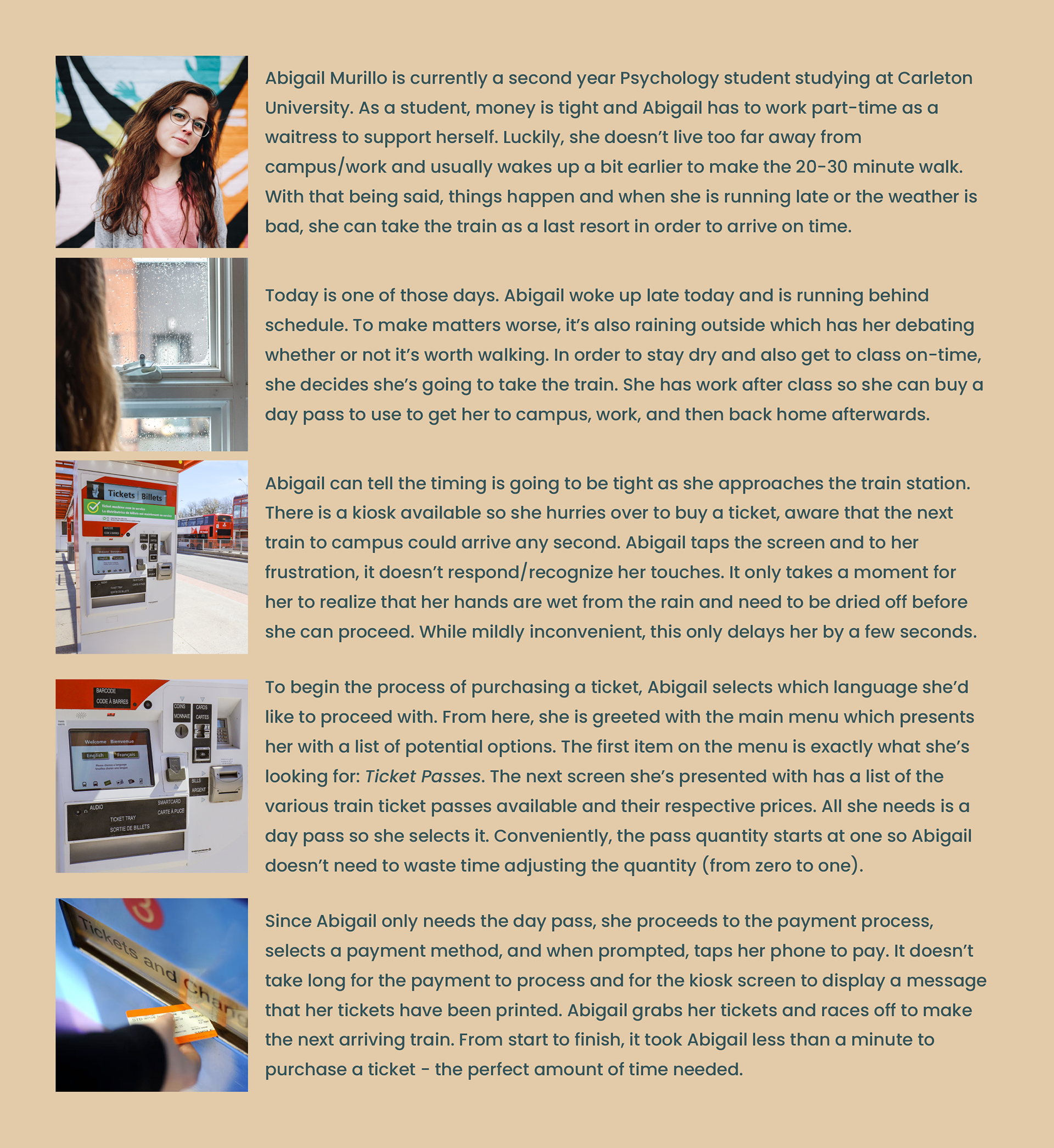
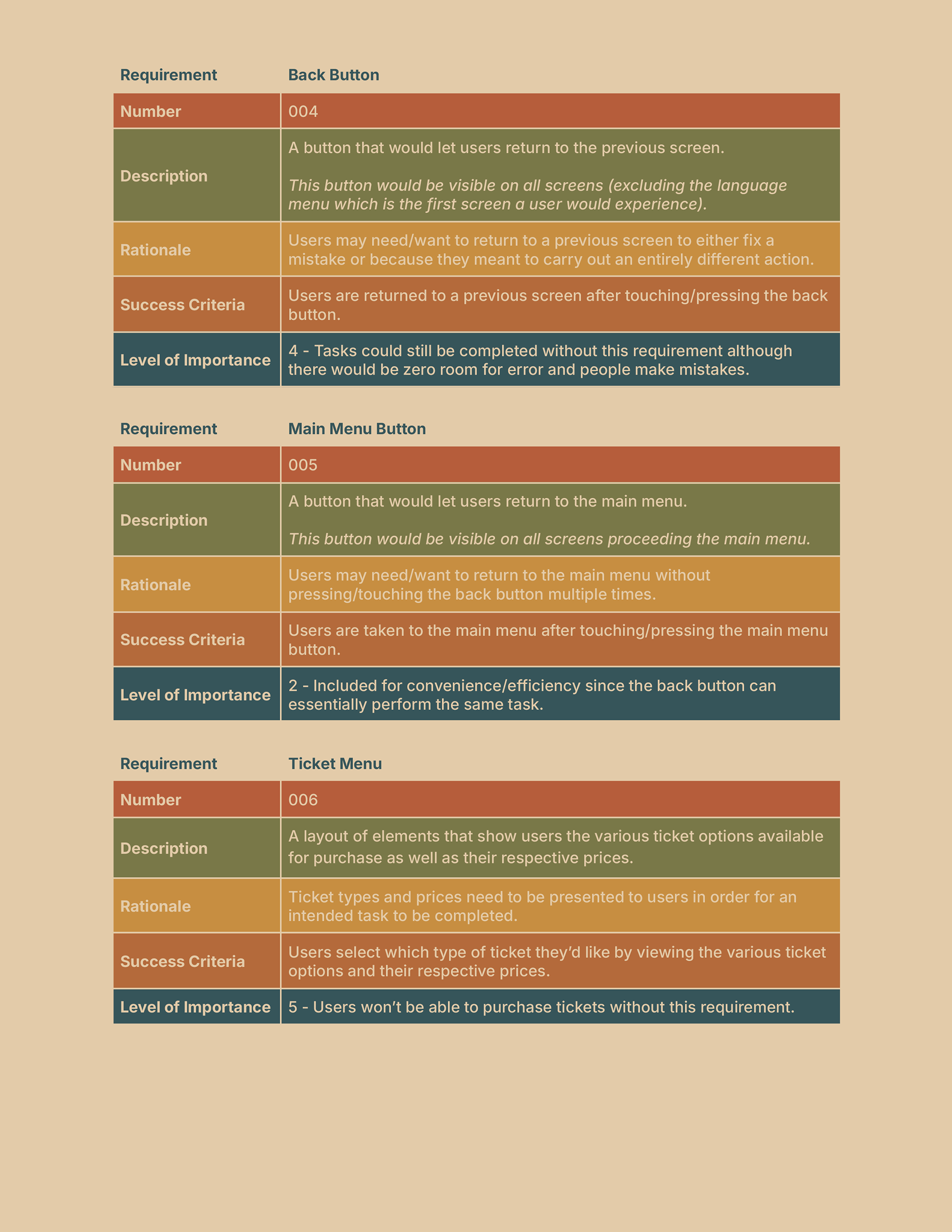
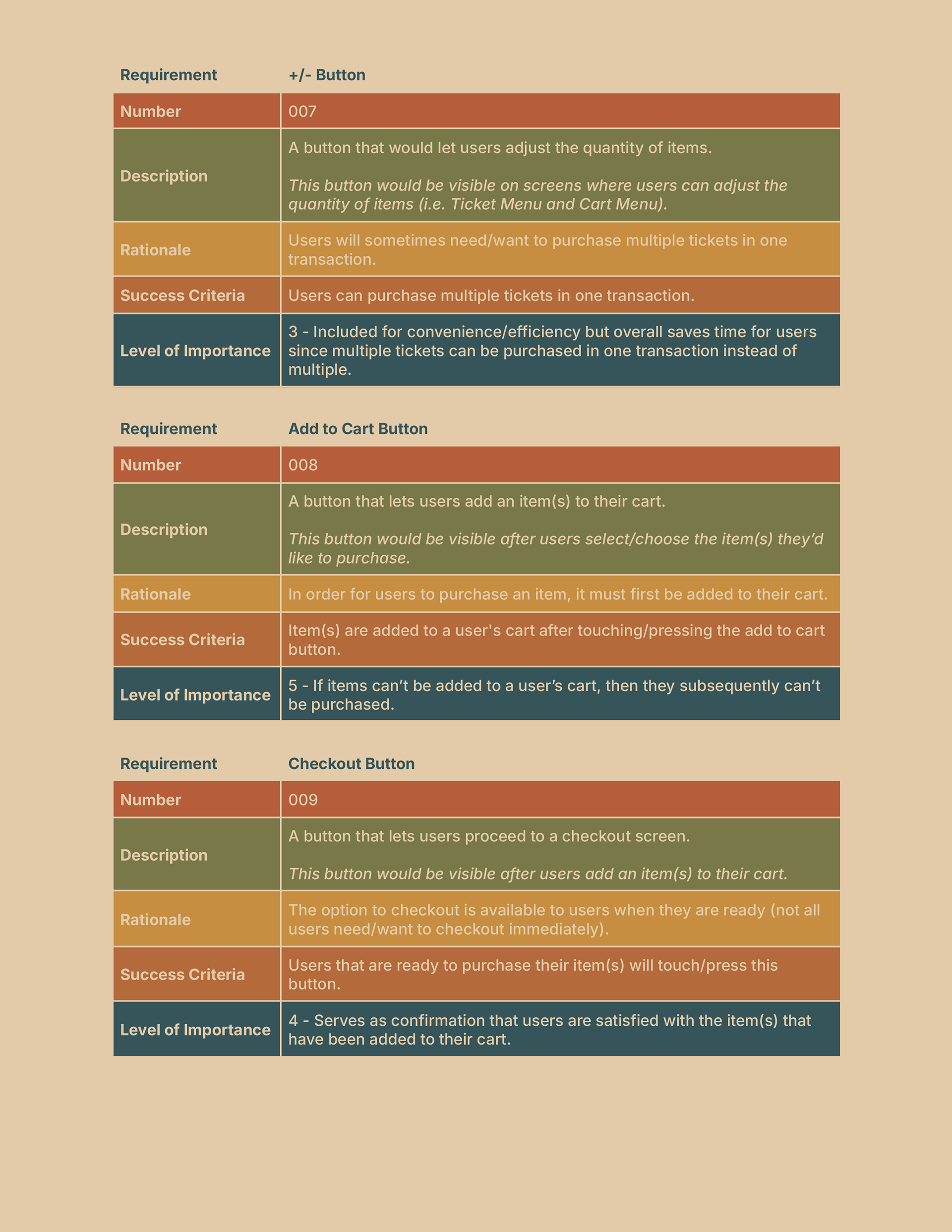
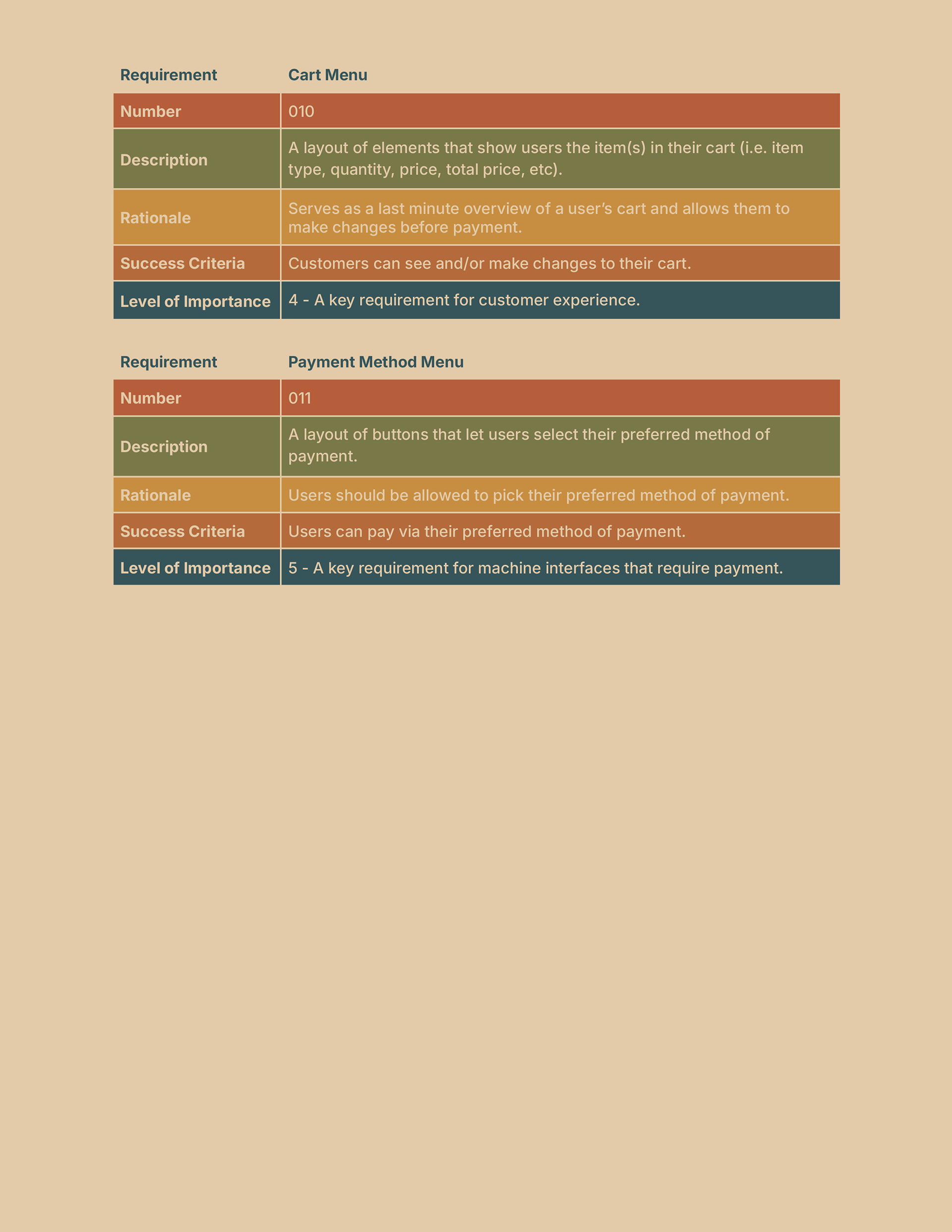
Functional & Non-Functional Requirements
This deliverable defines a structured set of functional and non-functional requirements for a train ticketing machine, based on user needs identified through prior task analysis. Each requirement is documented with a clear description, rationale, success criteria, and level of importance to support prioritization and ensure the system effectively meets user goals while maintaining usability, performance, and reliability.
Low-Fidelity Interface Prototype
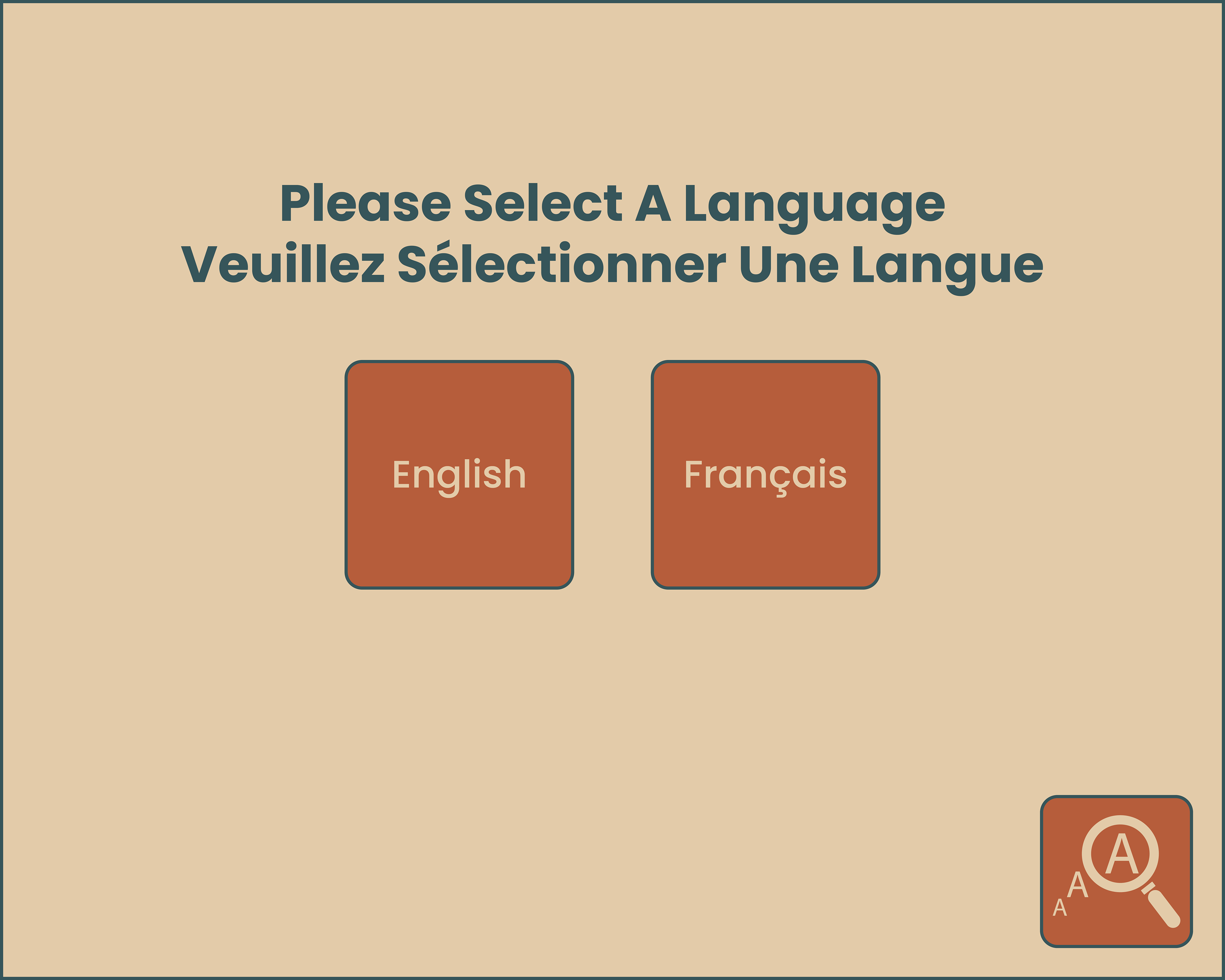
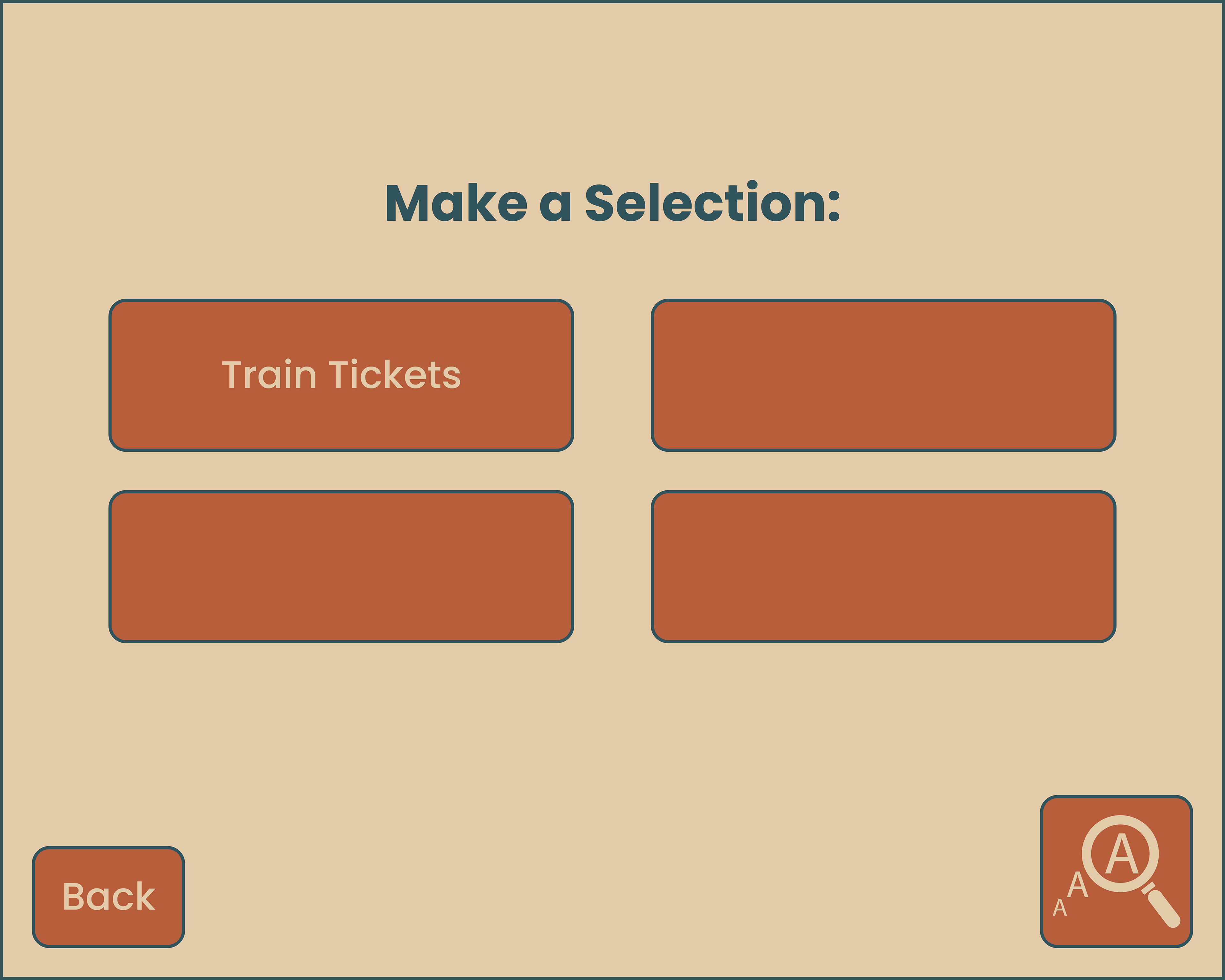
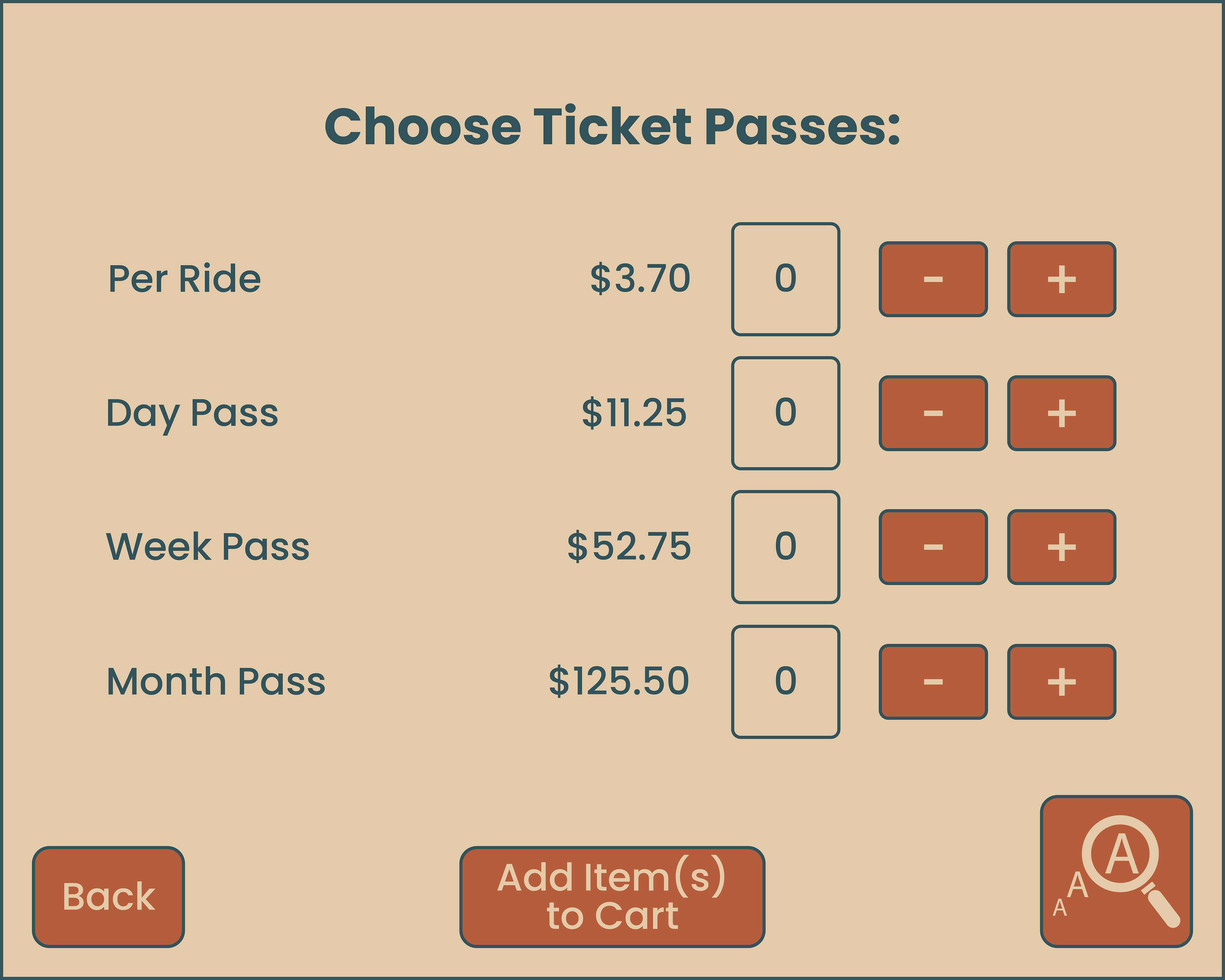
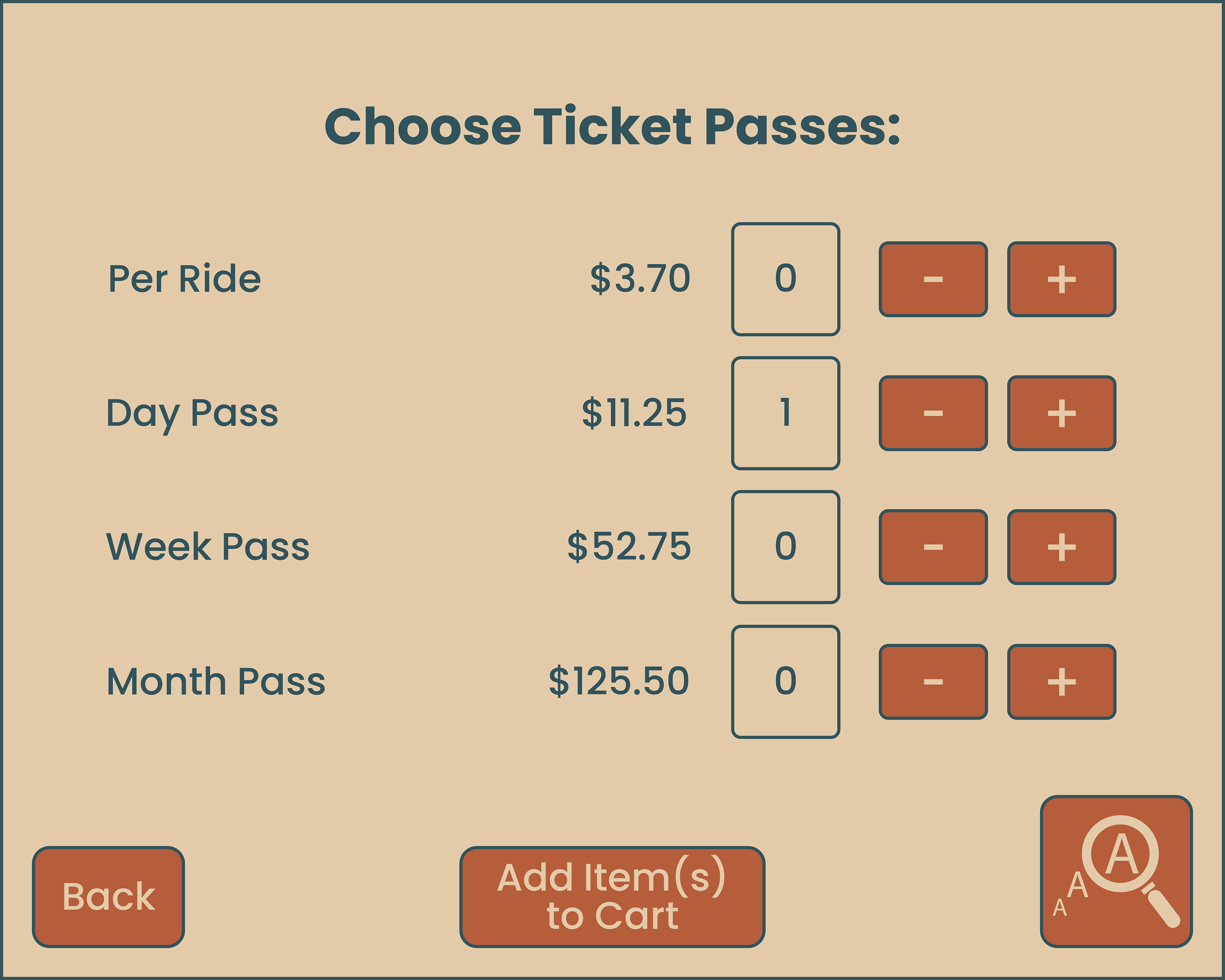
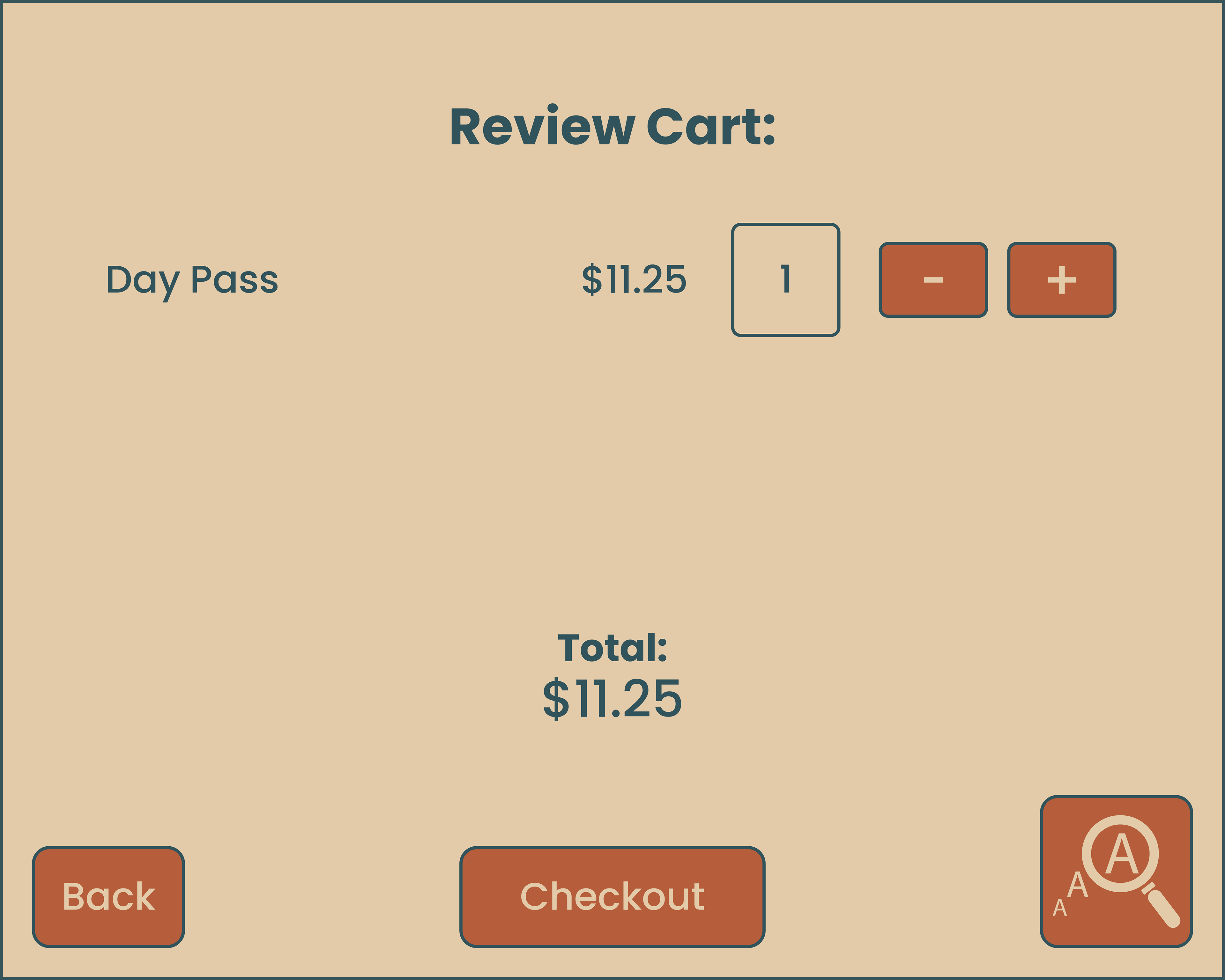
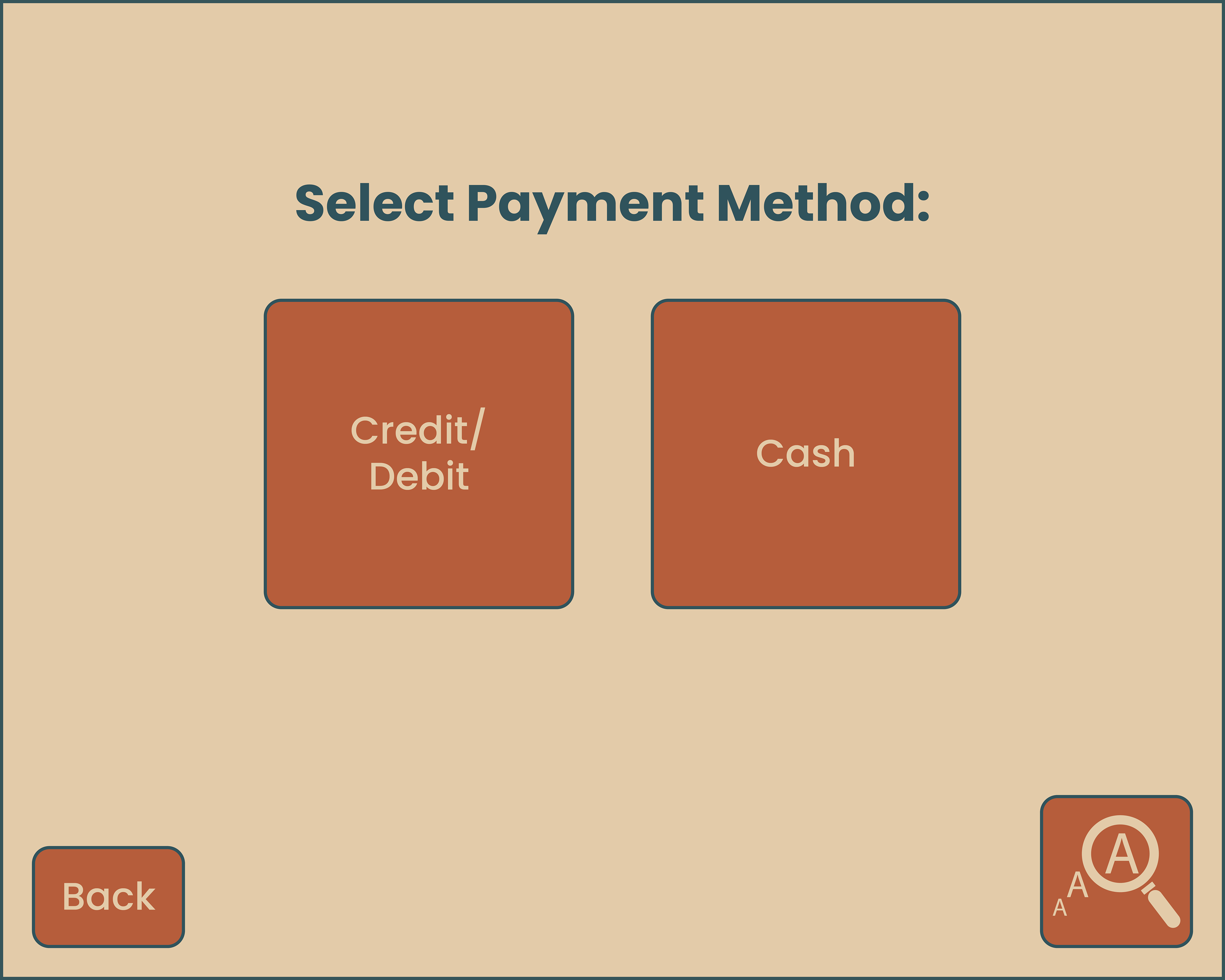
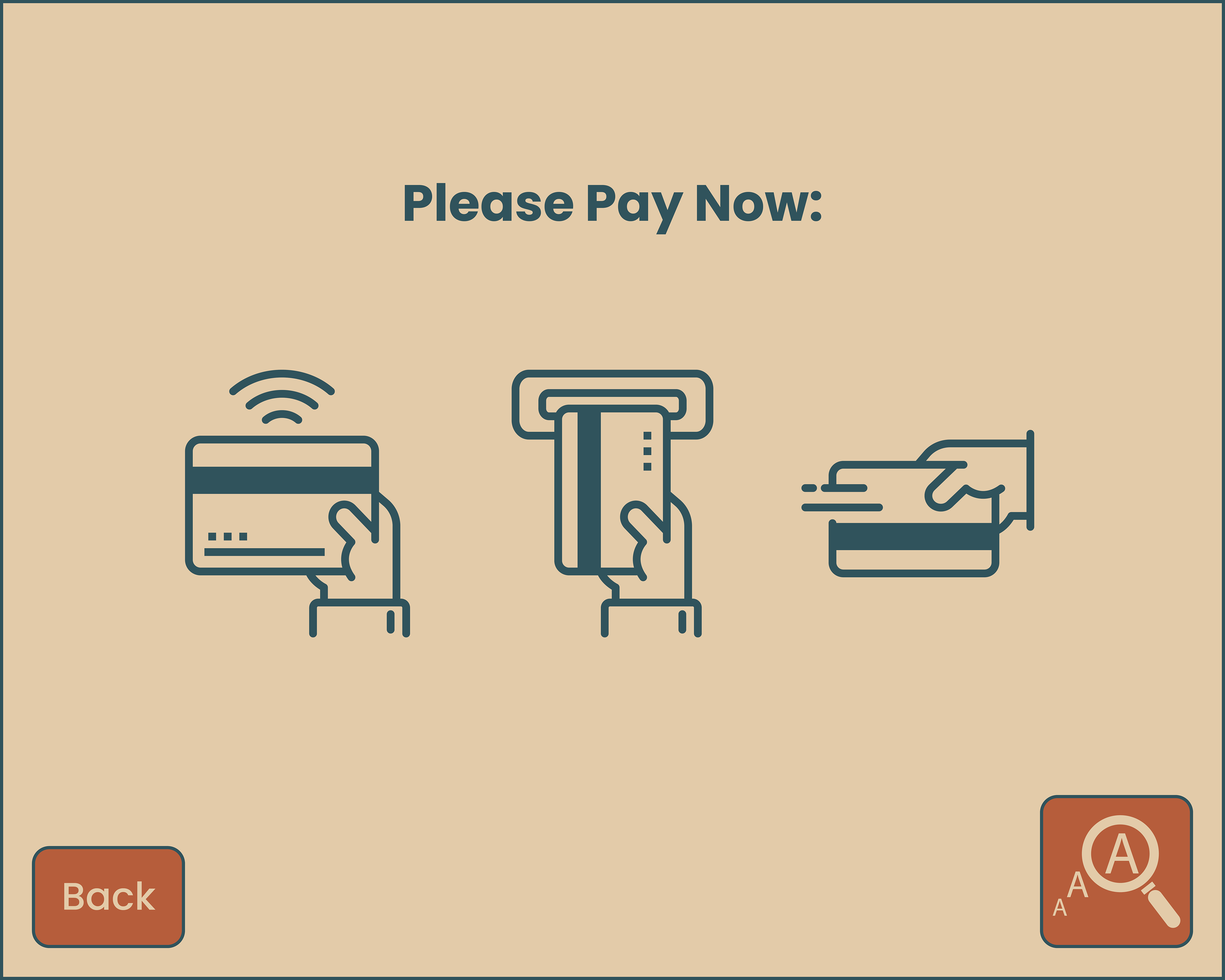
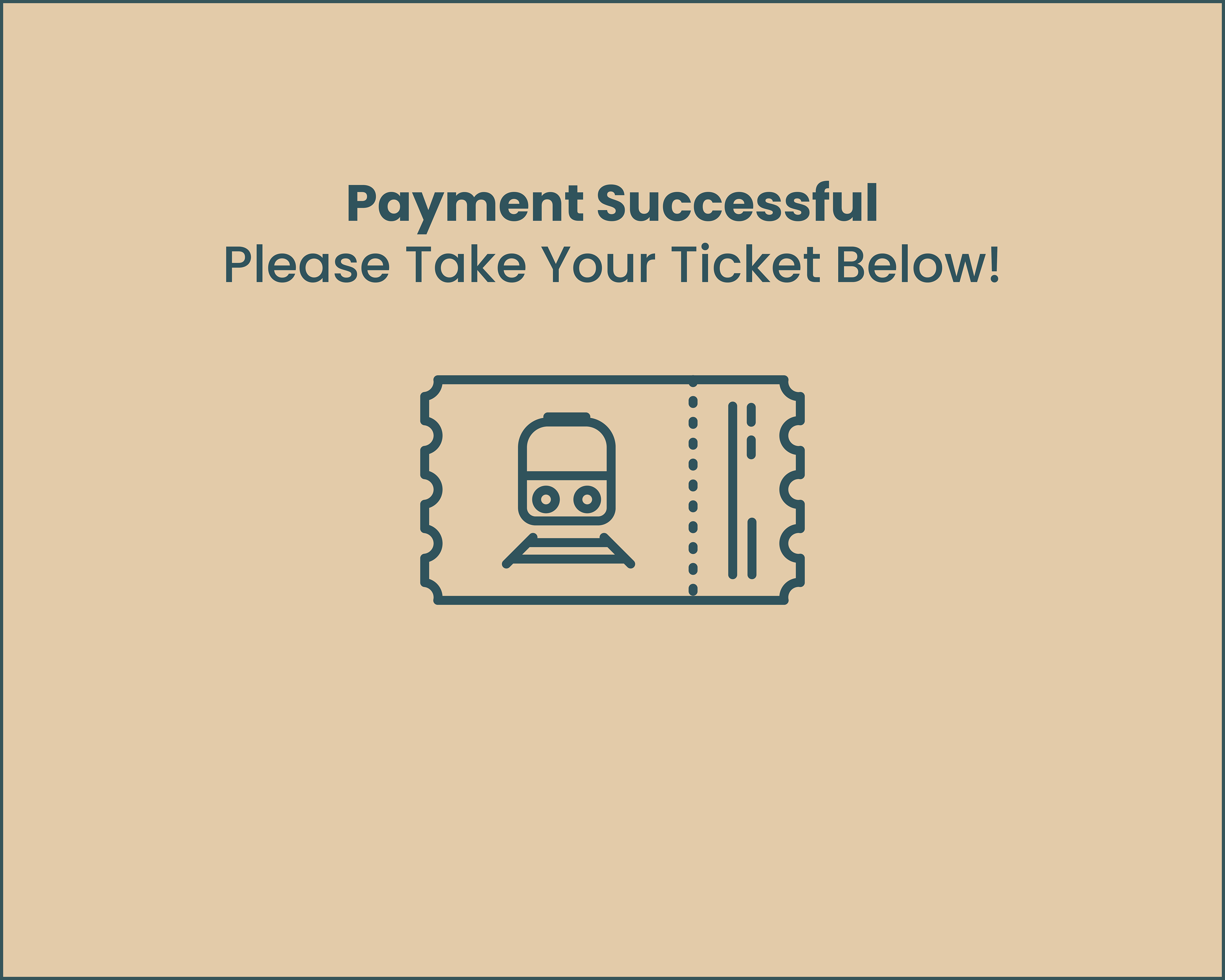
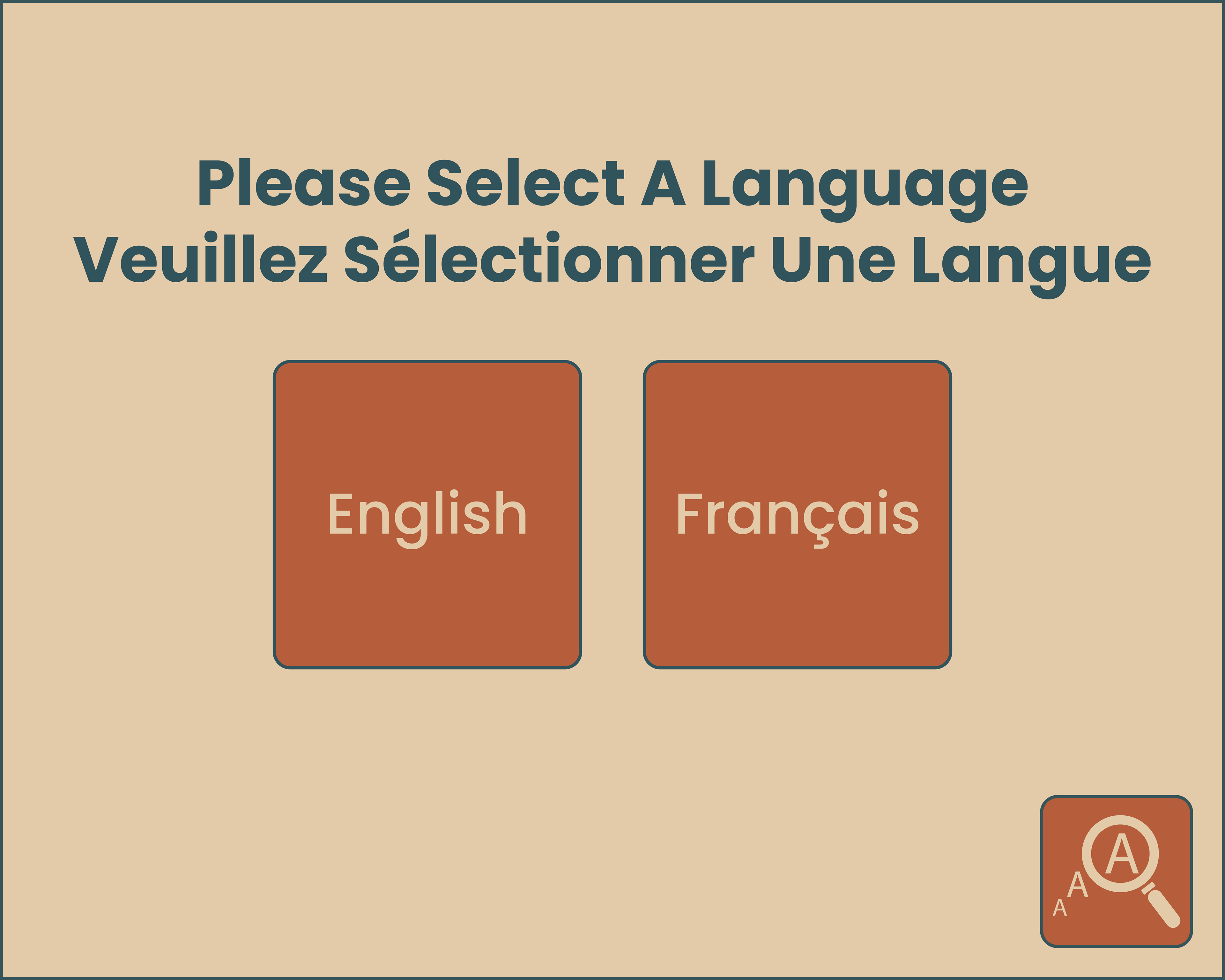
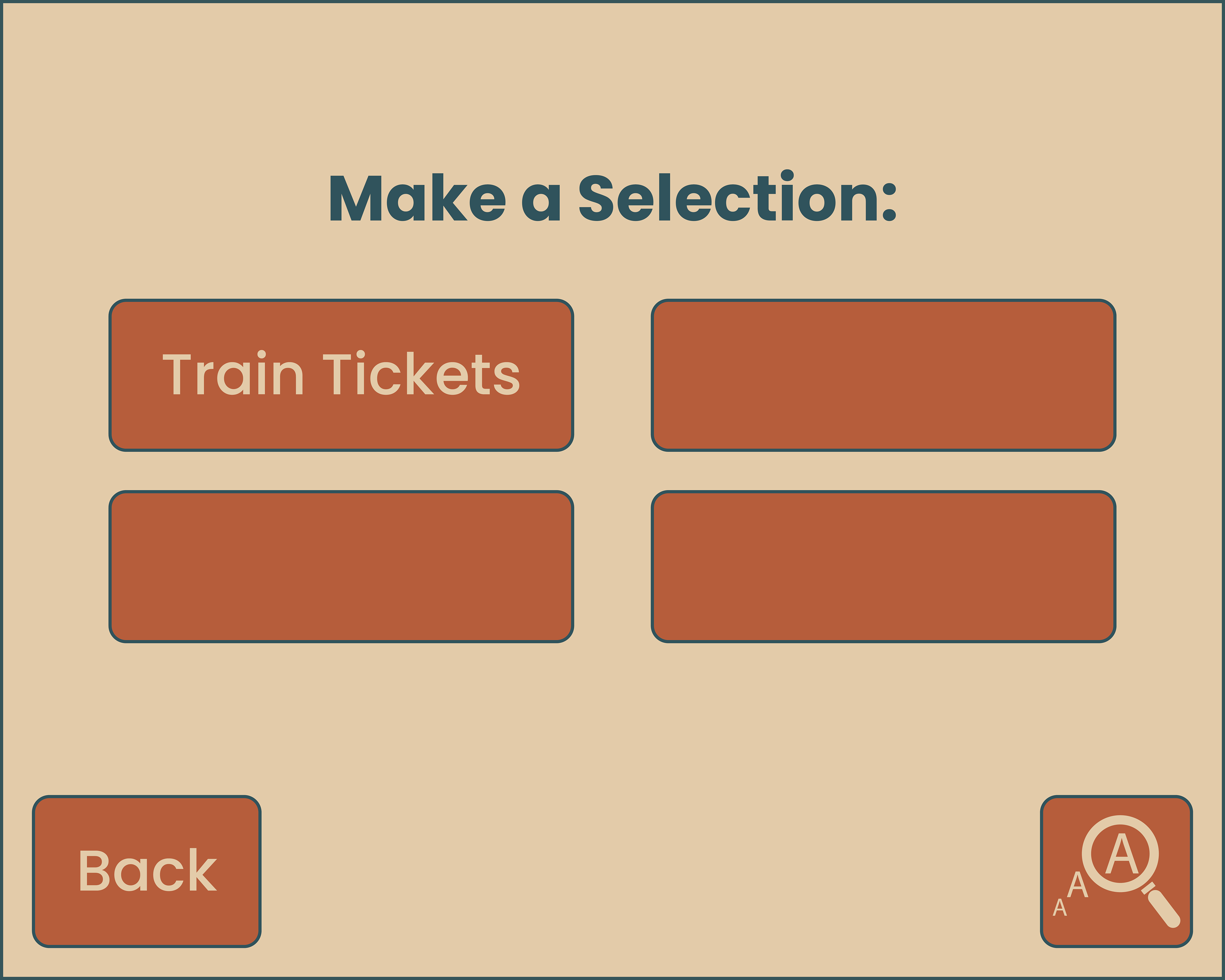
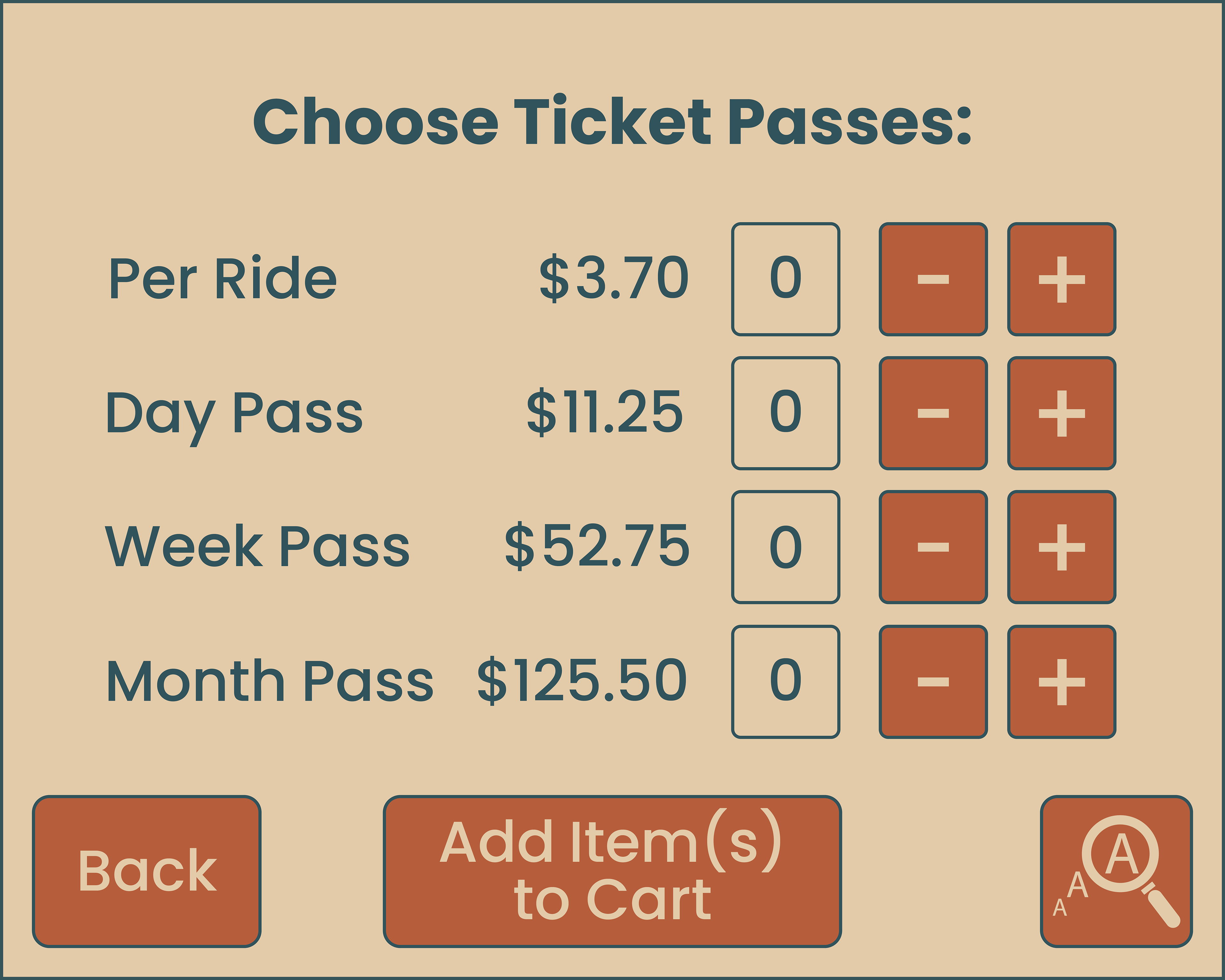
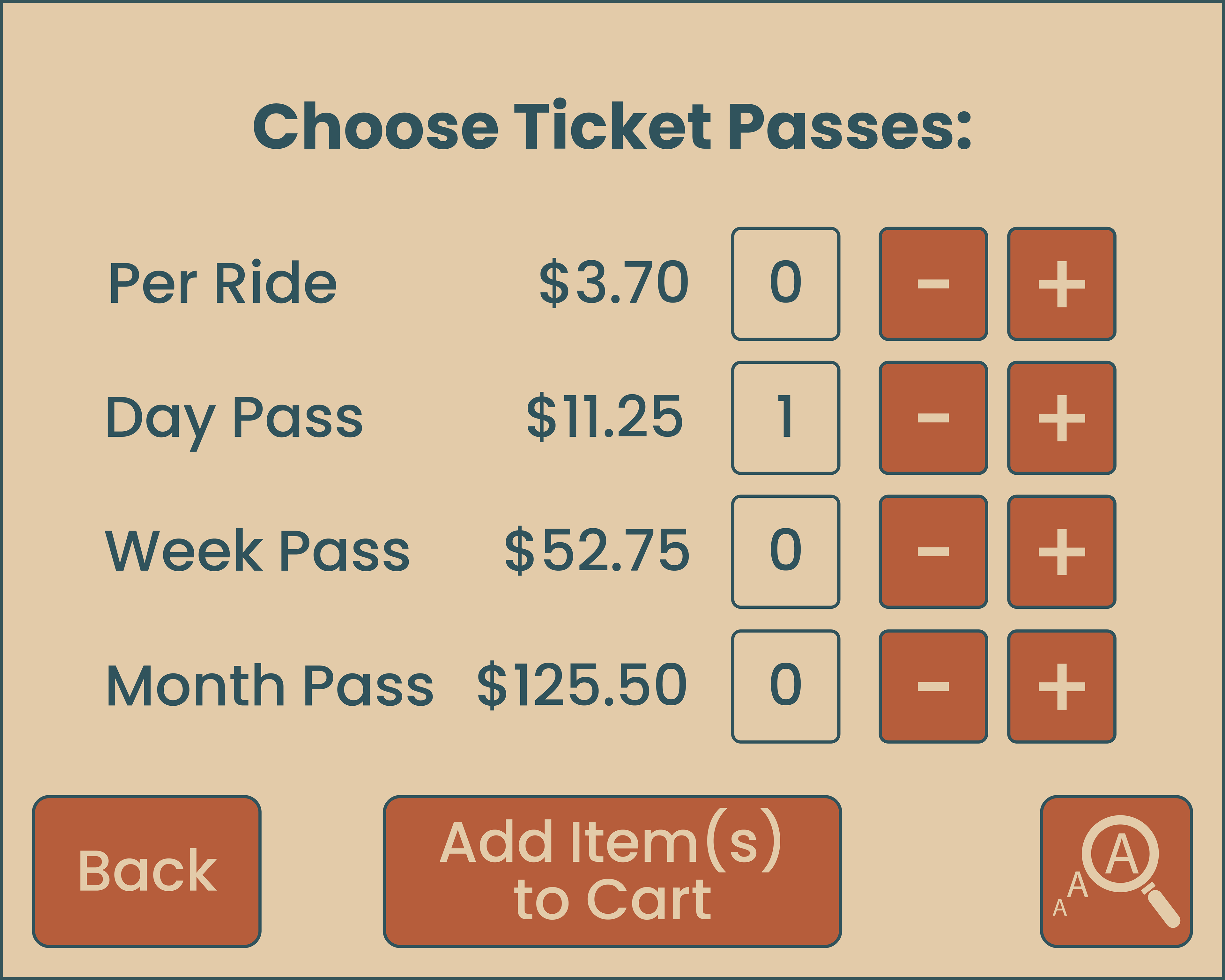
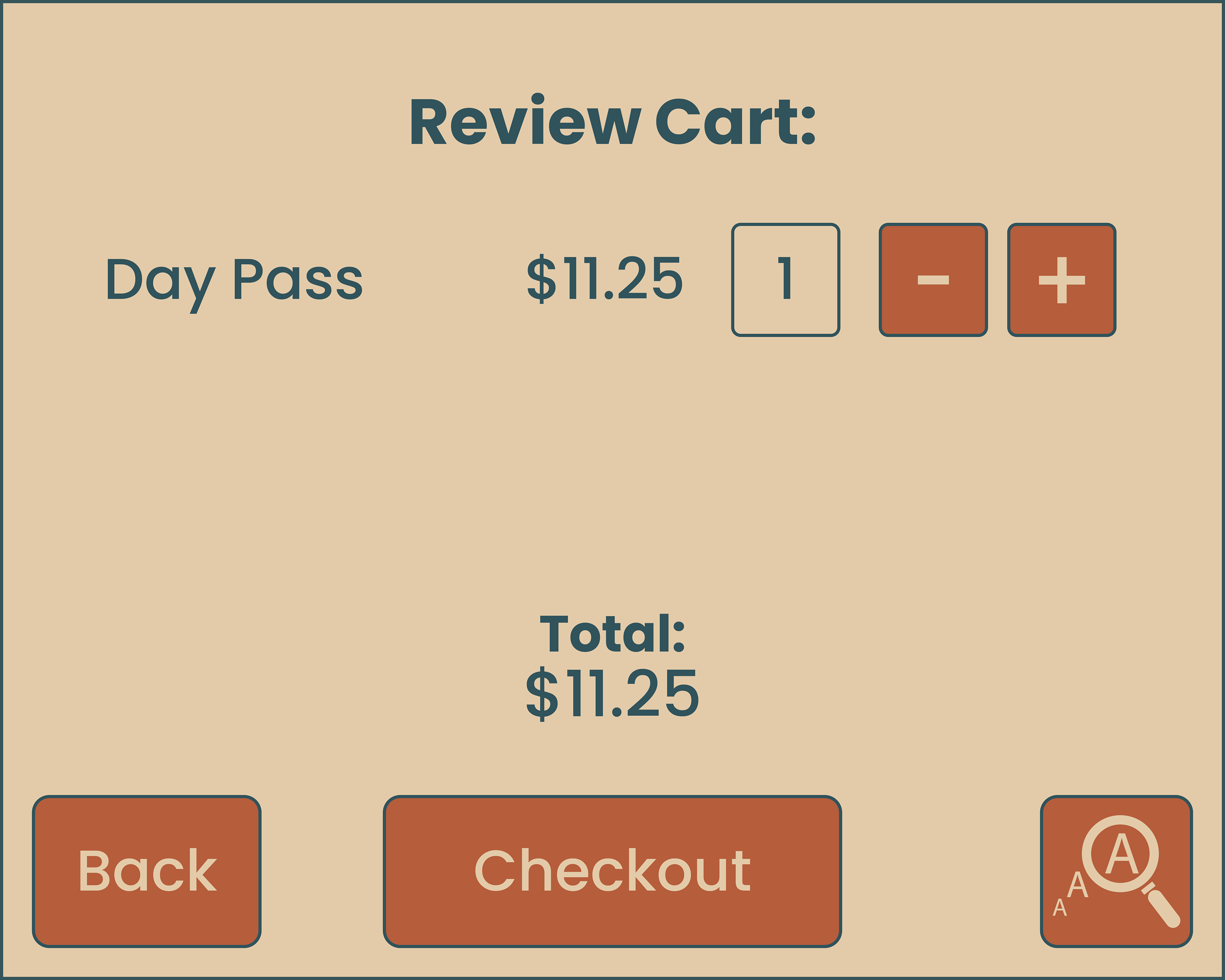
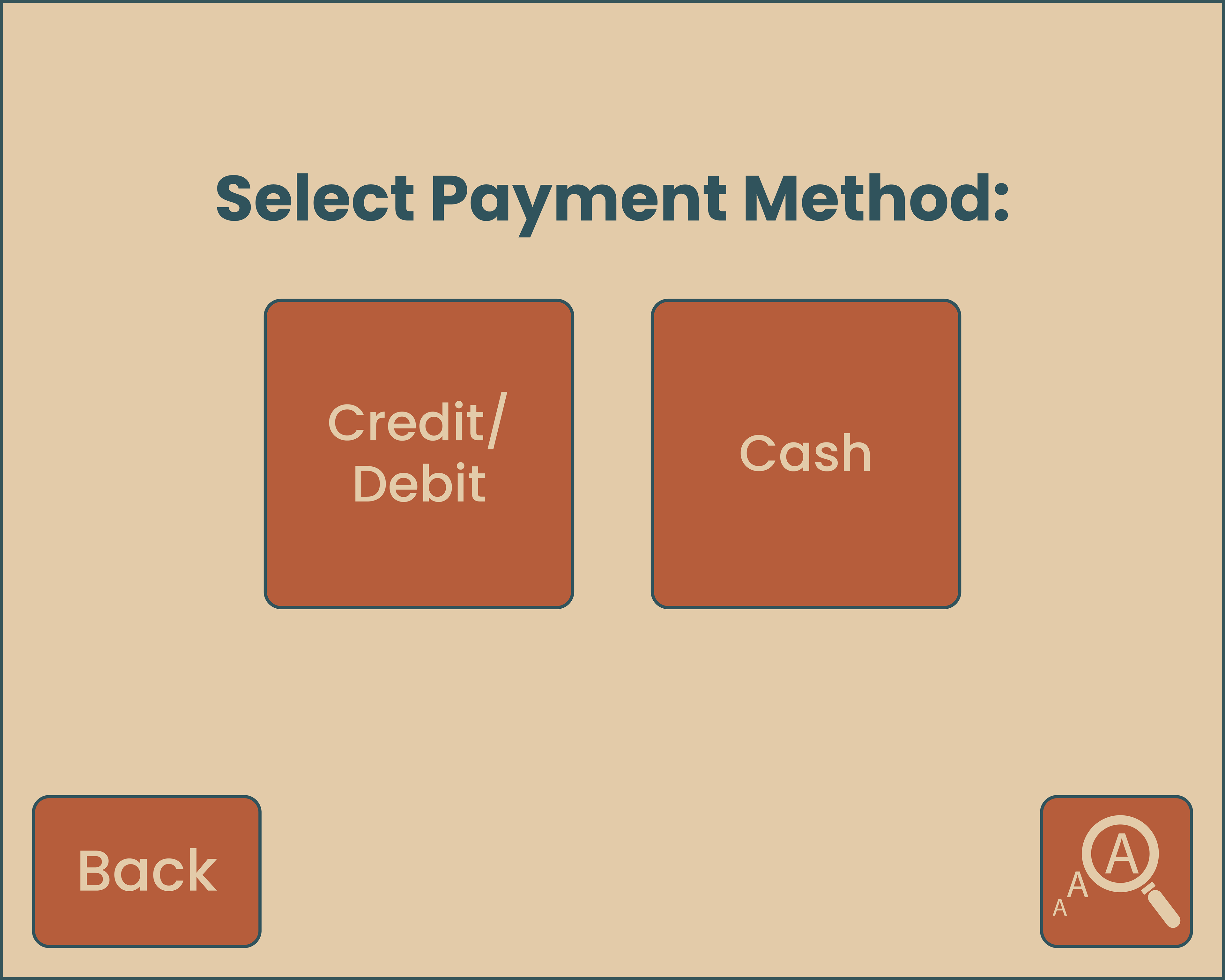
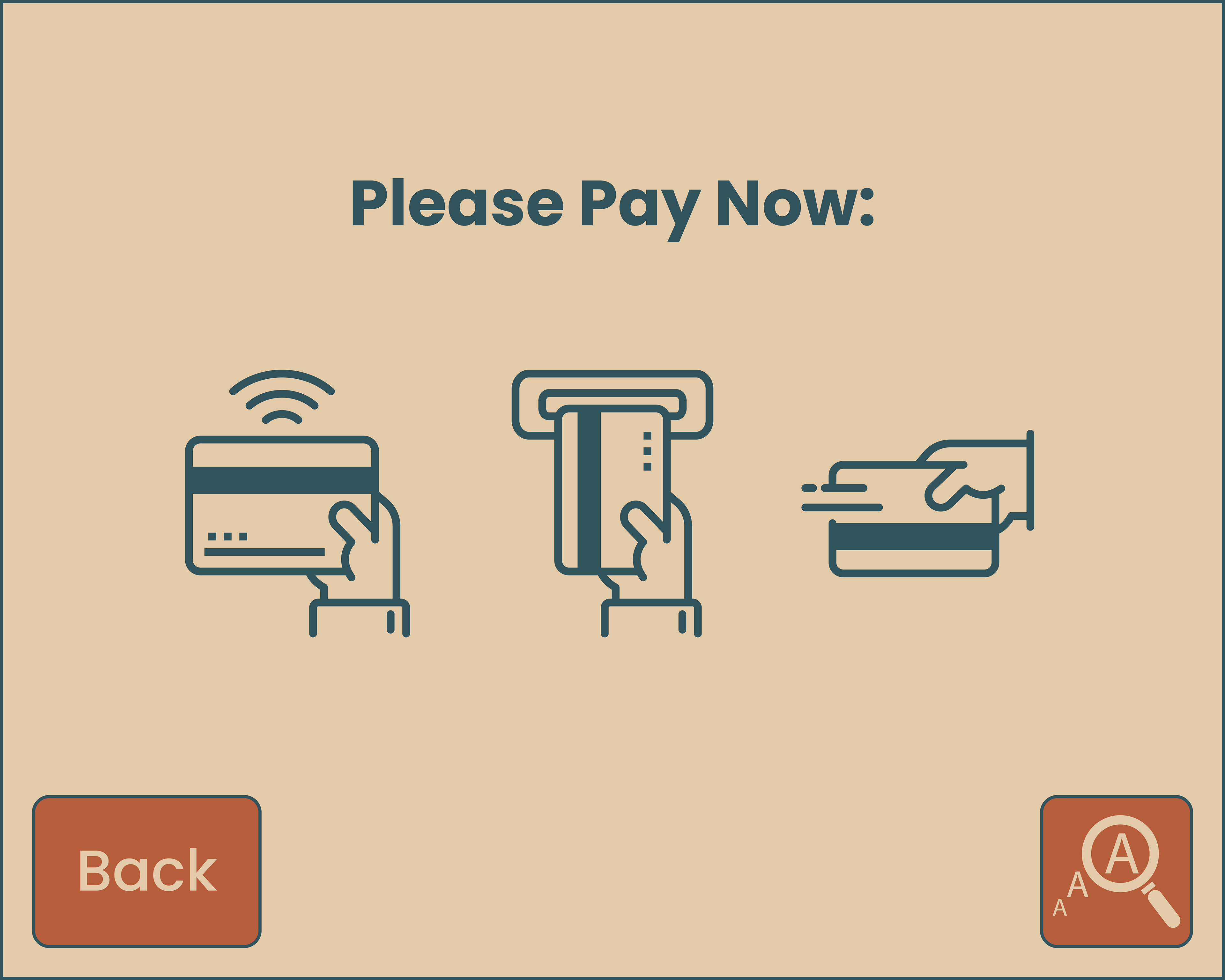
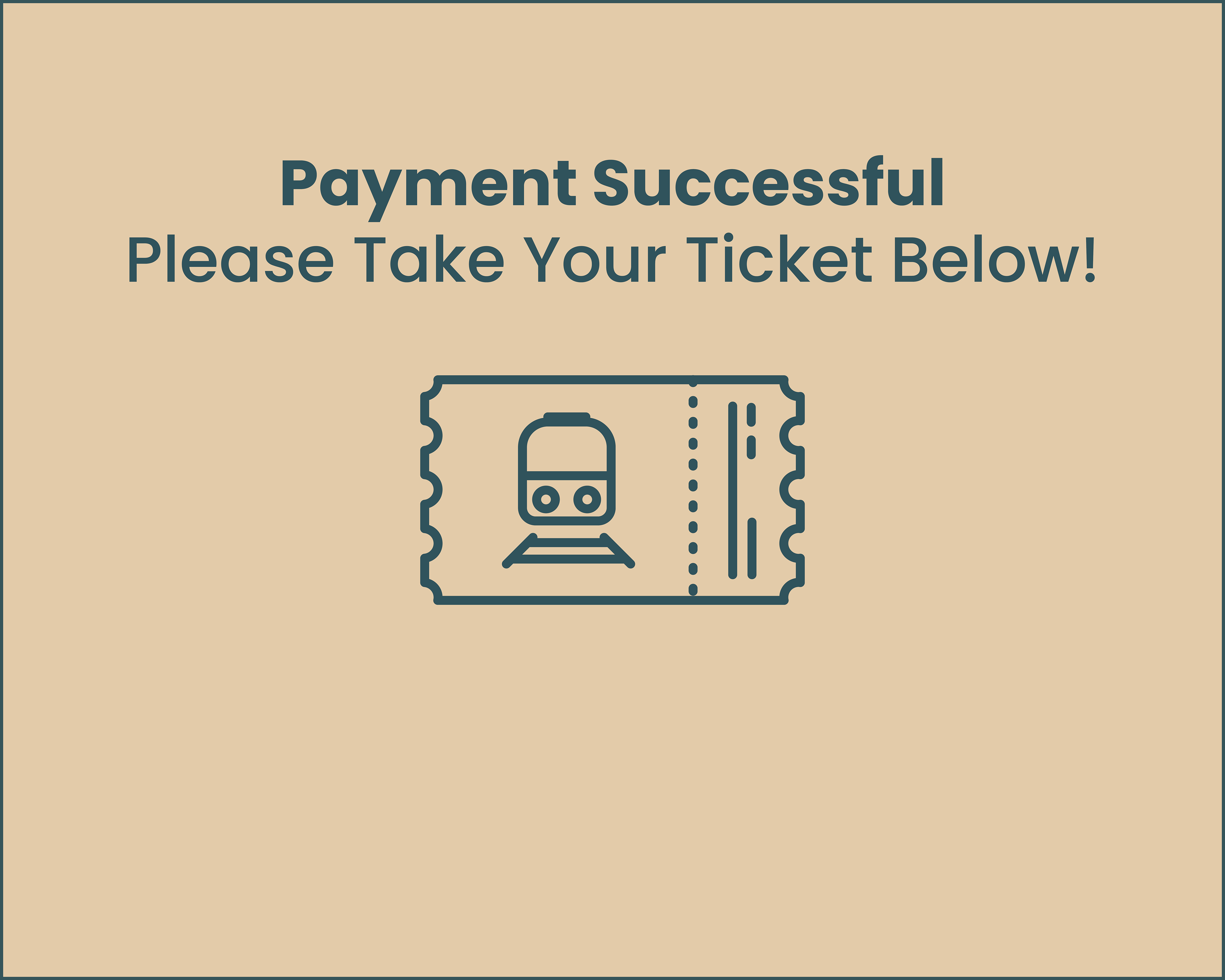
This low-fidelity prototype explores the layout and interaction flow of a train ticketing machine interface, informed by prior user research, task analysis, and system requirements. The prototype applies core UX and Gestalt design principles to define screen structure, navigation, and labeling, and is intended for early-stage usability testing and iterative design refinement.
Standard Interface Layout
Accessibility-Optimized Interface Layout
Usability Evaluation Strategy
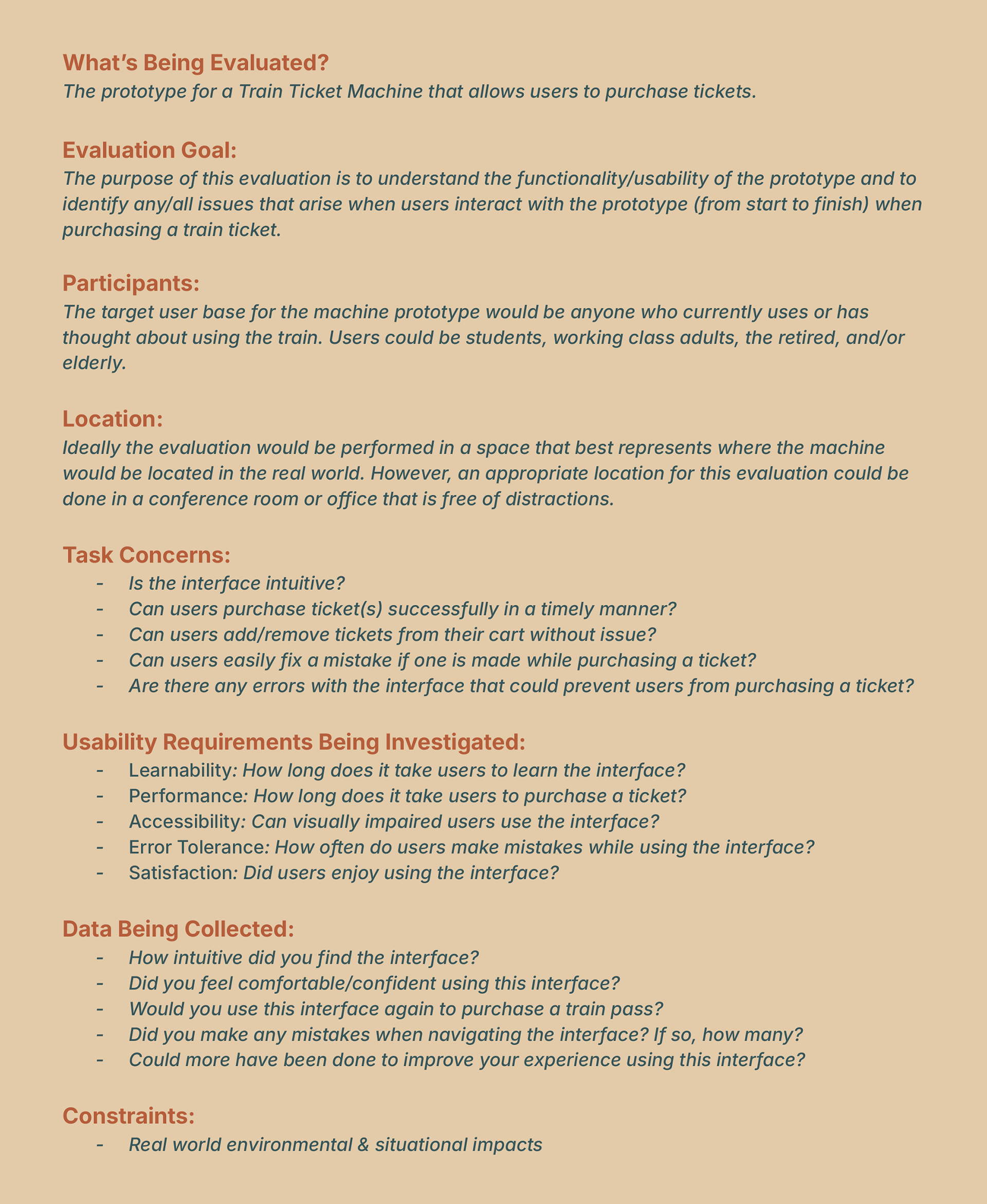
This evaluation strategy outlines a structured approach for testing the low-fidelity train ticketing machine prototype. It defines the purpose of the evaluation, target users, testing context, key tasks, usability requirements, and data to be collected, ensuring the prototype can be assessed effectively and inform future design improvements.
Research Findings Presentation Outline
This research deliverable presents the evaluation findings for the train ticketing machine prototype in a concise, stakeholder-focused presentation format. The presentation was selected to effectively communicate key insights, usability outcomes, and design recommendations to a non-technical audience, using visual structure to support understanding and decision-making around future development.
To efficiently summarize the evaluation findings based on the previous evaluation strategy, the appropriate research deliverable will be a presentation. A presentation would be an appropriate research deliverable for a train ticket machine prototype because it would be able to clearly and concisely communicate key information about the prototype, including its design, features, and performance. This is important because the audience, which may include potential customers, will need to understand the prototype in order to assess its usefulness and feasibility.
In the eyes of stakeholders, presentations are engaging and provide visual aids to enhance understanding and interest. Most importantly, they can provide a structured overview of the prototype, allowing for the audience to easily follow the key points and understand the main findings and conclusions of the research. This can be particularly effective when presenting a new user interface as it allows the audience to see the prototype in action and understand how it works. Furthermore, audiences/stakeholders might have limited time to review the research deliverable, and a presentation can help to ensure that they are able to quickly and easily understand the key information.
A presentation would be an effective way to share information about the machine prototype with stakeholders and build support for its implementation. Through presentation, researchers could effectively communicate all the potential benefits of the prototype, such as improved user experience and increased efficiency. To support these claims, evidence from the testing and evaluation can be presented.
Overall, the most appropriate research deliverable for a train ticket machine prototype would be a presentation because it allows the researchers to effectively communicate the key information about the prototype to the audience in a clear and engaging manner. Researchers can effectively share information about the prototype, build support for its implementation, and ultimately help to advance future development of train ticket machines.