

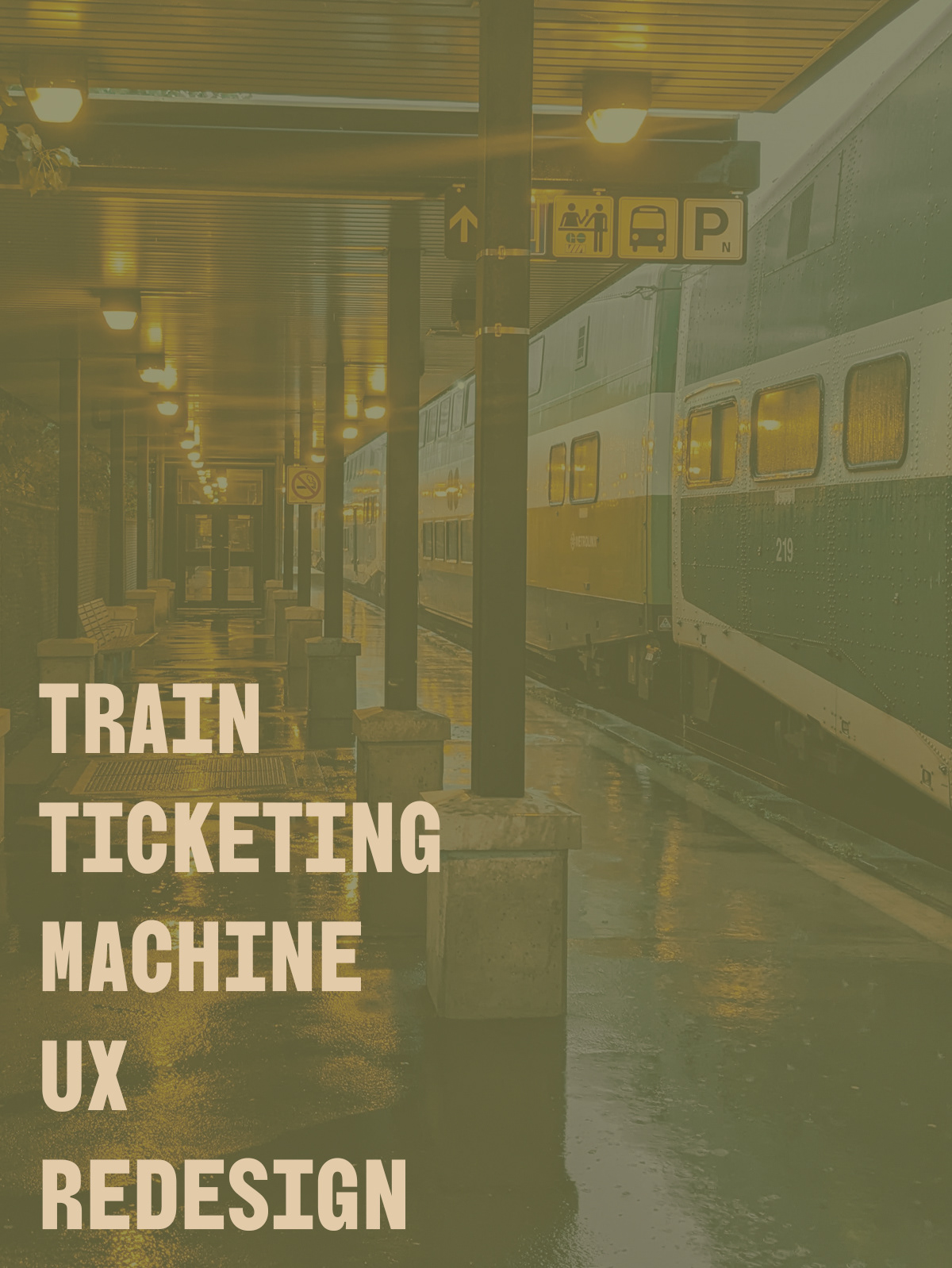
A UX case study focused on rethinking a public train ticketing machine, from understanding user needs to exploring how people move through the ticket-purchase process. The work includes user research, task analysis, and low-fidelity prototyping, with an emphasis on making the interface clearer, easier to use, and more efficient for a wide range of users.

This work focused on developing a user-centered design strategy for an e-commerce experience by identifying user needs, constraints, and opportunities for improvement. Through persona creation, scenario development, experience mapping, and conceptual wireframing, the project translated user insights into clear design recommendations and early interface concepts, balancing usability goals with real-world implementation challenges.

This work focused on evaluating and validating user interface designs through structured usability research and testing methods. The project involved creating a comprehensive test plan, defining evaluation tasks, conducting heuristic evaluations and card sorting exercises, and analyzing usability test results to identify issues, insights, and actionable recommendations for improving interface usability and clarity.
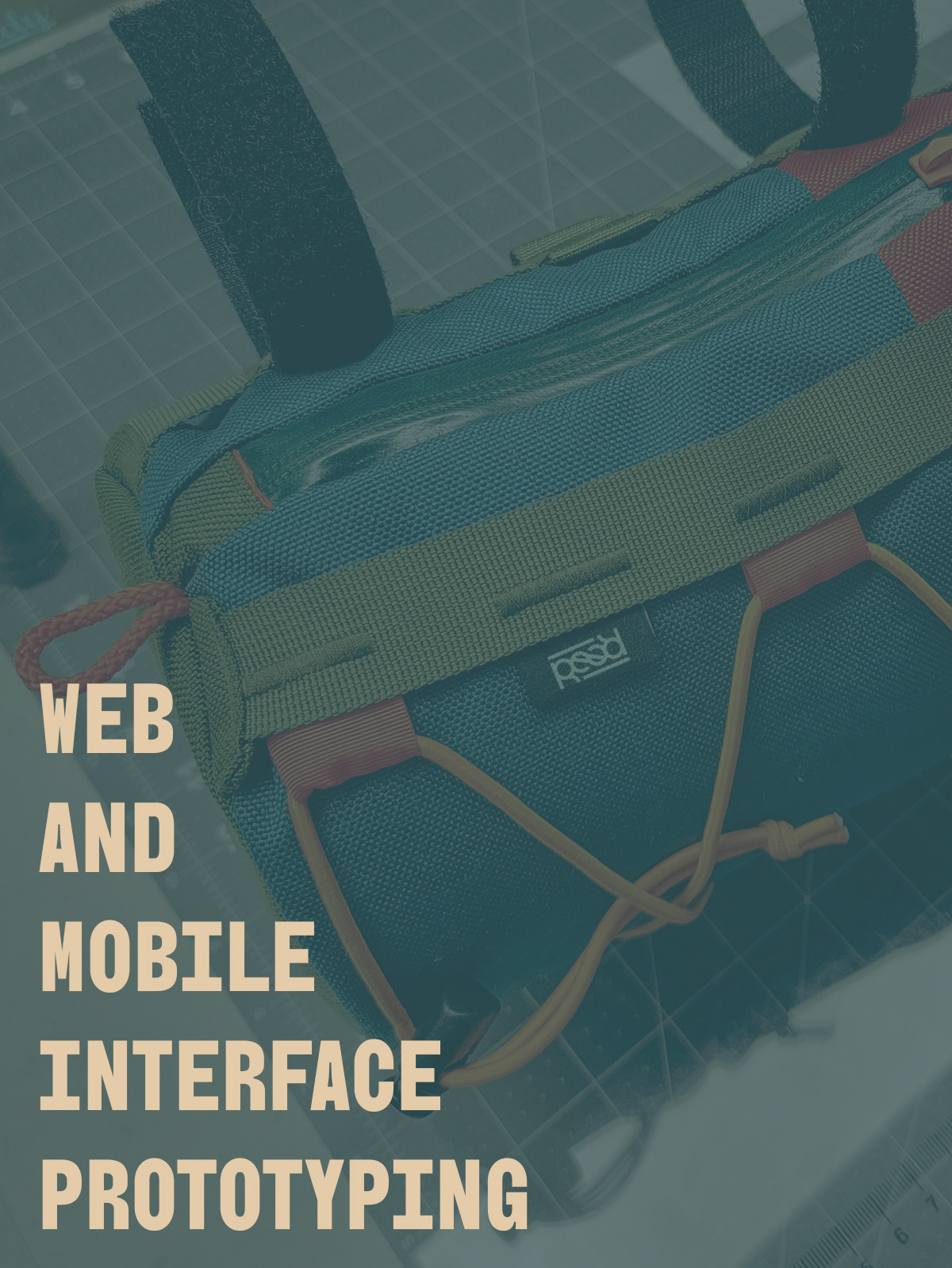
This coursework focused on designing and prototyping web and mobile interfaces through an iterative, user-centered process. The work combined scenario development, task flows, and fidelity planning with web and mobile prototypes supported by clear design rationale. Emphasis was placed on usability principles, accessibility, interface standards, and design decision-making informed by cognitive psychology and interaction design best practices.

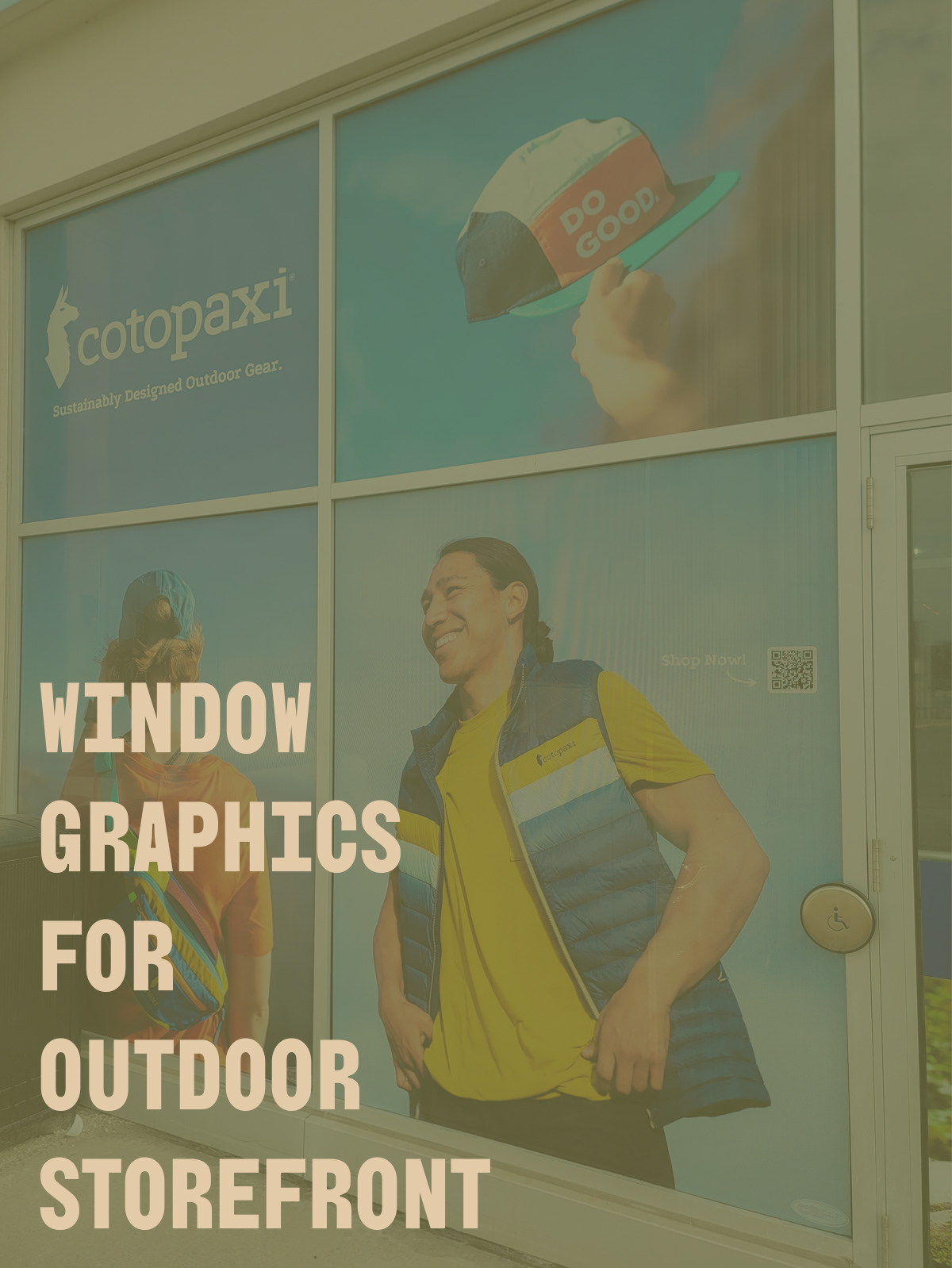
Window graphics are a key retail marketing tool, serving as a storefront’s first impression by capturing attention, promoting seasonal campaigns, and reinforcing brand identity. At Trailhead Paddle Shack, I designed window graphics to showcase featured brands including Arc'teryx, Outdoor Research, and Cotopaxi, collaborating with each to source current assets and create cohesive, high-impact visuals across multiple windows.